
After a series of discussions in Campo Grande, Brazil, nations have pledged to enhance protections for 40 migratory animal species as they travel across borders and ecosystems.
Amy Fraenkel, the executive secretary for the Convention on the Conservation of Migratory Species of Wild Animals (CMS), highlighted the importance of extending safeguards to cheetahs, snowy owls, giant otters, great hammerhead sharks, and other species. This development occurred during the 15th gathering of countries party to the UN treaty established in 1979, with Canada being the only nation yet to ratify it. The newly protected species have been included in various appendices of the treaty, which range from stringent protections to promoting collaborative efforts to prevent species extinction and endangerment.
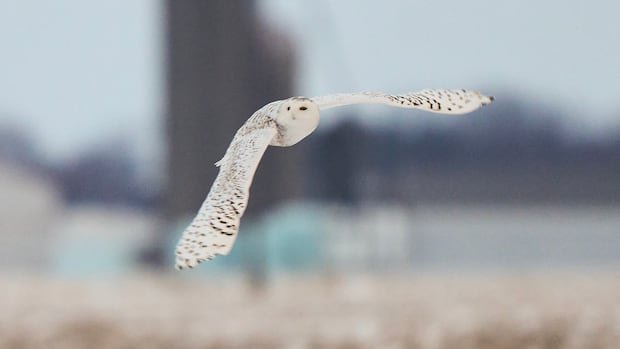
These migratory species do not have a permanent residence, with the snowy owl, for instance, breeding in the Canadian archipelago but traveling across the Arctic. As climate change impacts their prey, like lemmings, their movements are being affected. With their inclusion in Appendix II of the treaty, countries are encouraged to collaborate on joint action plans to safeguard the snowy owl.
Additionally, two varieties of hammerhead sharks have been added to the list, as they face challenges such as getting caught in fishing nets. These social creatures undertake migrations for reproduction and are at risk due to industrial fishing practices.
The species’ critical status has led to them being placed in the more stringent Appendix I, requiring countries to prohibit intentional catching or harvesting of these animals. The total number of species protected under both CMS appendices now exceeds 1,200.
While criticism has been directed at the CMS for relying on voluntary measures and lacking funding, the recent meeting in Campo Grande has seen progress, particularly among South American countries. Efforts have been made to add several species to the list, including giant otters, a type of catfish, and a neotropical bird, which traverse the continent during different stages of their lives.
Looking ahead, the focus is on translating ambitions into concrete actions to ensure the effective implementation of conservation efforts. The gathering, alongside other treaties like CITES, sheds light on the importance of protecting these remarkable creatures that navigate the Earth. The next meeting is scheduled for 2029 in Bonn, Germany, marking 50 years since the treaty’s inception.

