
Astronaut Jeremy Hansen made history by becoming the first Canadian to embark on a journey to the Moon, leading the Artemis II crew as they successfully executed the translunar ignition to progress further in their lunar expedition. Following approximately 25 hours in Earth’s orbit, NASA confirmed the readiness of all critical systems on the Orion spacecraft, allowing Artemis II to continue its course. The Orion capsule swiftly departed Earth’s orbit as planned, setting course for the Moon nearly 400,000 kilometers away.
In a statement, NASA Administrator Jared Isaacman expressed excitement over the resumption of American space missions to the Moon, emphasizing the extended reach of this current endeavor compared to past missions. This marked the first engine firing event for a space crew since Apollo 17 in 1972, with NASA declaring the operation flawless during a subsequent news conference.
Lori Glaze, acting associate administrator for NASA’s Exploration Systems Development Mission Directorate, confirmed the crew’s well-being and the spacecraft’s excellent performance post the engine firing. Hansen, communicating from the Orion capsule, praised the collective capabilities of humanity and expressed gratitude for the support driving their moon-bound journey.
NASA conducted thorough tests on the Artemis II crew’s life-support systems before authorizing their departure for the Moon. The ongoing Artemis II test flight serves as a prelude to NASA’s ambitious plans for establishing a moon base and sustaining human presence on the lunar surface.
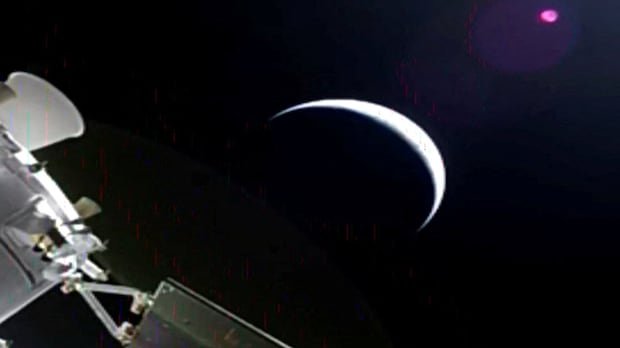
Commander Reid Wiseman, while testing cameras during the flight, described the Earth as a diminishing sunlit sphere and shared challenges faced in adjusting exposure settings for capturing images from a distance. NASA anticipates releasing captured images later in the mission, including the awaited “Earthrise” photo reminiscent of the iconic image taken by Apollo 8 astronaut William Anders in 1968.
The crew, comprising Wiseman, pilot Victor Glover, Christina Koch, and Hansen, will complete a lunar flyby before returning directly to Earth without making any stops on the lunar surface. This journey will break the Apollo distance record set in 1970, marking the farthest distance traveled from Earth by humans. Canadian reporters will have an exclusive opportunity to connect with Hansen during the CSA’s live space-to-Earth communication session, where he will share initial impressions of the mission and engage in a brief question-and-answer session. The next significant milestone will be the lunar flyby scheduled for Monday.

