
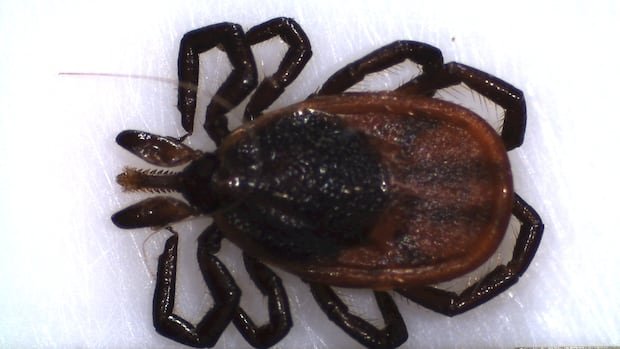
Nova Scotia’s snowy winter may not lead to a decrease in tick numbers this year, according to experts. Contrary to common belief, deep and long-lasting snow can serve as insulation for ticks, aiding in their survival. Laura Ferguson, an Acadia University biology department assistant professor, explained that the snow cover has likely shielded a significant portion of the tick population through the winter.
CBC meteorologist Ryan Snoddon noted that while Nova Scotia experienced some cold spells earlier in the season, the prolonged cold temperatures capable of killing ticks occurred after the snow had already provided protection. Notably, the Halifax airport had continuous snow cover from January 18 to March 21, totaling 64 days, the longest period of snow cover since 2020.
Ticks typically find sheltered locations like beneath leaf litter to endure the winter without feeding for extended periods. Even in cold conditions, their metabolism slows down, making them less responsive to potential hosts. Ticks can survive for weeks or months in temperatures between 0°C and -5°C, with sustained temperatures below -10°C or sudden temperature fluctuations posing risks to their survival.
Jantina Toxopeus, an associate professor at St. Francis Xavier University, highlighted that ticks usually freeze at temperatures below -15°C, but the rate of temperature drop influences their adaptability. While rapid temperature changes can challenge ticks, gradual decreases, like to -10°C, are better tolerated. Despite extreme cold snaps in the past, such as temperatures dropping to -27°C, there was no significant impact on the tick population in Nova Scotia.
Ferguson predicted that this year’s tick season is unlikely to differ significantly from previous years due to the robust tick population’s resilience. Despite the snowy winter, experts suggest that ticks in Nova Scotia have been relatively unaffected, with the snow cover providing more assistance than hindrance to their survival.

