
Voices with closer ties to the U.S. military have emerged recently, raising concerns about a series of boat strikes on suspected drug-carrying vessels in the Western hemisphere carried out by the Trump administration since early September. An unnamed Pentagon official and a retired U.S. Air Force colonel have expressed worries that the emphasis on combating Latin American drug trafficking could impact U.S. military capabilities globally and result in unintended consequences, such as hindering collaboration with allies to reduce American casualties from drug-related harm through supply control.
The administration’s approach of treating drug cartels as enemy combatants, likening them to terrorist groups, has been critiqued as flawed by the anonymous Pentagon source. They highlighted differences, noting that cartels lack the structured hierarchy typically seen in terrorist organizations and are more readily accessible for direct confrontation, unlike terrorists who often operate in remote, secure locations. The concern was echoed by J. William DeMarco, the retired Air Force colonel, who emphasized the importance of perception and messaging in the administration’s actions.
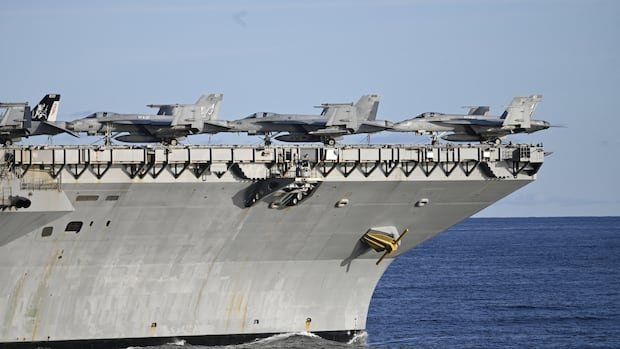
The recent boat strikes, which have resulted in at least 61 fatalities, have raised suspicions of a potential regime change agenda for Venezuela. The U.S. has increased its reward for the capture of Venezuelan President Nicolás Maduro, and the strikes have extended beyond the Caribbean to the Pacific region. This escalation has led to the redeployment of the nuclear-powered aircraft carrier USS Gerald R. Ford to South America, leaving no carriers in the Middle East or Europe during a period of heightened tensions, including violence in Gaza.
Concerns have been voiced regarding the U.S. administration’s focus on drug interdiction operations, especially as the targeted vessels’ drug-carrying status remains uncertain. Suggestions have been made to shift focus towards addressing addiction issues domestically to curb drug demand. The U.S. strikes have strained relations with Colombia, a key ally in counter-narcotics efforts, while diverting attention from major drug-producing nations like Colombia, Peru, and Bolivia to transit countries like Venezuela.
Criticism of the administration’s lethal force tactics has not been limited to domestic sources, as Democrats in Congress and UN Human Rights Council experts have raised transparency and legality concerns. The use of lethal force in the region is not unprecedented for the U.S., with historical instances like Operation Just Cause in Panama and a controversial anti-drug operation in Peru drawing parallels to the current situation. Despite uncertainties surrounding the long-term implications of the administration’s strategy, it is evident that the use of military force against drug cartels has been a consistent element of the Trump presidency’s policy approach.

