
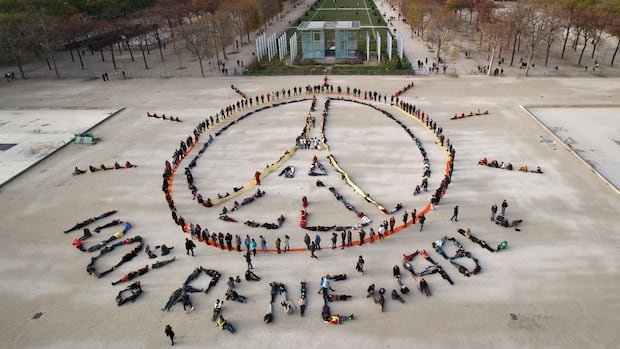
Environmental activists gathered near the Eiffel Tower during the COP21 UN climate summit in Paris on Dec. 6, 2015, to form a human chain symbolizing the peace sign and spelling out “100% renewable.” This event occurred shortly before the historic signing of the Paris Agreement, which marked the first global commitment to combat climate change by keeping global warming “well below” 2 degrees Celsius compared to pre-industrial levels, with efforts to limit it to 1.5 degrees Celsius.
Ten years later, representatives from nearly 200 nations will convene in Belem, Brazil, from Nov. 10 to 21 for COP30, the annual United Nations climate summit. Despite the adoption of the Paris Agreement, levels of greenhouse gases that contribute to climate change and global temperatures have continued to rise steadily over the past decade, reaching record-breaking heights.
A recent analysis compared the state of the world in 2015 to the present day in terms of the actual climate conditions, advancements in clean technologies, governmental policies and regulations, and financial investments in climate initiatives. The findings reveal a noticeable increase in global temperatures, with the Earth warming more than 0.3 degrees Celsius in the past decade alone. According to the 2025 UN Emissions Gap Report, current projections indicate a potential 2.3 degrees Celsius warming by 2100 if nations fulfill their climate commitments.
The transition to cleaner technologies has been evident, with the proliferation of electric vehicles (EVs) and a significant surge in renewable energy generation. Notably, renewables surpassed coal as a primary source of electricity globally in the first half of 2025. While progress has been made, the rate of growth in clean energy adoption falls short of the necessary pace to meet climate targets.
Moreover, the Paris Agreement catalyzed shifts in laws and regulations worldwide, prompting the implementation of national policies aimed at reducing carbon emissions and promoting low-carbon technologies. Countries like Canada introduced measures such as carbon pricing, zero-emission vehicle mandates, and net-zero emissions goals in alignment with the agreement’s objectives.
Financially, investments in green energy have soared, surpassing $2 trillion USD in 2024 and outpacing fossil fuel investments. The agreement also emphasized the importance of developed nations assisting developing countries in climate change mitigation and adaptation efforts, aiming to provide $100 billion USD annually for such initiatives. Despite some setbacks in climate finance for adaptation, overall investment in climate initiatives has been on the rise since 2015.
As the world reflects on the impact of the Paris Agreement, experts highlight the need for intensified efforts to achieve its ambitious goals. Suggestions include revising global trade agreements to prioritize the energy transition towards renewables and making climate actions mandatory rather than voluntary. The ongoing UN climate meetings are seen as critical platforms for sector-specific climate progress, offering potential for significant advancements in the fight against climate change.

