
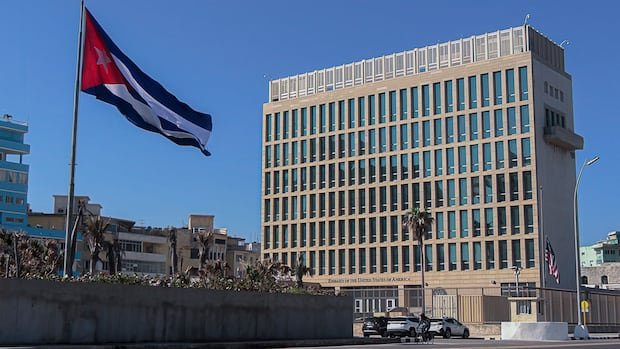
The United States placed economic sanctions on a large business group managed by Cuba’s military and a joint mining project between Cuba and Canada, as part of increased pressure on Cuba’s leaders by targeting foreign investment sources. Following the capture of Venezuela’s leader, a key Cuban ally, in January, President Donald Trump hinted at Cuba being the next target and restricted most oil deliveries to Cuba, exacerbating power shortages on the island.
Recently, Trump expanded U.S. sanctions on Cuba through an executive order, criticized by President Miguel Díaz-Canel as coercive. The order targeted Grupo de Administracion Empresarial S.A. (GAESA), a military conglomerate controlling a significant portion of Cuba’s economy, and its Executive President, Ania Guillermina Lastres Morera, according to U.S. Secretary of State Marco Rubio.
Additionally, the measures affected Moa Nickel SA, a joint venture between Sherritt International Corp based in Toronto and Cuba’s state-owned nickel company, impacting Cuba’s foreign exchange earnings. The U.S. government has also limited U.S. travel and remittances to Cuba and discouraged regional allies from hiring Cuban doctors, a program generating significant revenue for Cuba.
Sherritt, one of the few companies operating extensively in Cuba despite U.S. sanctions, announced a halt in its direct involvement in Cuban joint ventures. The company is repatriating its expatriate staff in Cuba and urged its partners to do the same. Operations at its refinery in Fort Saskatchewan, Alta., remain unaffected for now.
Cuba condemned the new U.S. sanctions as aggressive economic tactics violating international law. The U.S. has persistently demanded Cuba’s economic liberalization, reparations for expropriated properties, and democratic elections, demands Cuba’s socialist government rejects. Cuban officials blame decades of U.S. sanctions for the country’s economic challenges.
Senator Rubio met with military officials at the U.S. Southern Command in Florida to discuss U.S. operations in the Caribbean region. He emphasized that the U.S. will continue its actions until Cuba implements necessary political and economic reforms. The sanctions coincided with Rubio’s discussions at the Vatican with Pope Leo, who advocated for dialogue amid escalating U.S.-Cuba tensions.
Experts from the United Nations criticized Trump’s fuel blockade on Cuba, describing it as “energy starvation” with severe implications for the island nation’s development and human rights.

