
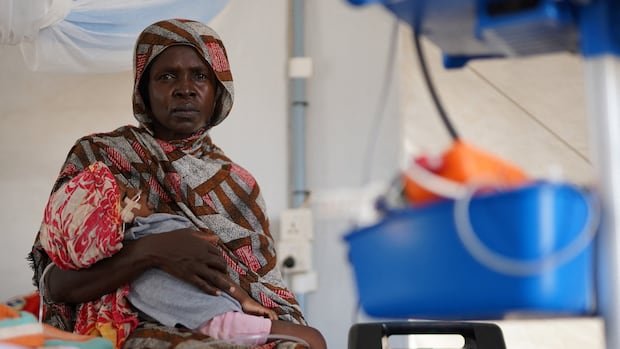
Sudan’s Rapid Support Forces (RSF) have accepted a humanitarian ceasefire proposal from the United States and Arab nations and are willing to engage in discussions regarding a halt to hostilities, as stated in a press release on Thursday. Over the past 2½ years of conflict, both the RSF and the Sudanese military have considered various ceasefire initiatives, all of which have failed to materialize. The Trump administration has expressed its commitment to resolving the conflict in Sudan.
The recent announcement follows the RSF’s capture of the besieged city of El Fasher, which had been under siege for over 18 months and served as the last military stronghold in Darfur. The Sudanese army has yet to respond to the proposal.
According to an RSF statement, the group is eager to implement the agreement and begin immediate discussions on the terms for a cessation of hostilities and the core principles guiding Sudan’s political process.
While the army-led Security and Defense Council recently convened to discuss the proposal, no definitive response was provided. However, key figures and allies within the military have expressed their disapproval of the initiative.
A Sudanese military official, speaking anonymously to The Associated Press, indicated that the army supports the proposal but will only agree to a ceasefire once the RSF withdraws completely from civilian areas and relinquishes weapons, in accordance with prior peace proposals.
Massad Boulos, a U.S. adviser for African affairs, stated that the U.S. has been collaborating with the Sudanese military and RSF to facilitate a humanitarian truce and anticipates making an announcement soon. Boulos revealed that the proposed plan entails a three-month humanitarian ceasefire followed by a nine-month political process.
The conflict between the RSF and the military erupted in 2023, stemming from tensions between the former allies tasked with overseeing a democratic transition post the 2019 uprising. The World Health Organization reports that the conflict has resulted in a death toll of at least 40,000 individuals and displaced 12 million people, with aid organizations suggesting the actual casualty figures may be significantly higher. Additionally, over 24 million individuals are confronting severe food insecurity, as stated by the World Food Program.
Sudan has been plagued by a severe displacement crisis, with the recent events in El Fasher catalyzing further displacement. Reports indicate that the RSF engaged in violence, including summary executions and abductions, prompting international apprehension.
Islamic Relief highlighted the precarious state of community kitchens that provide vital support to numerous families, warning of potential collapse. A recent survey by the organization revealed that 83% of households in east and west Sudan are currently experiencing food shortages.
El-Fasher and Kadugli have been identified as areas grappling with famine by the Integrated Food Security Phase Classification, attributing the crisis to man-made factors such as ongoing conflict, insecurity, and restricted access to food supplies. AbdulHakim Elwaer, the regional representative for Near East and North Africa, expressed optimism regarding the establishment of humanitarian corridors to facilitate aid delivery to vulnerable populations, emphasizing the urgency of addressing the hunger crisis in Sudan.

