
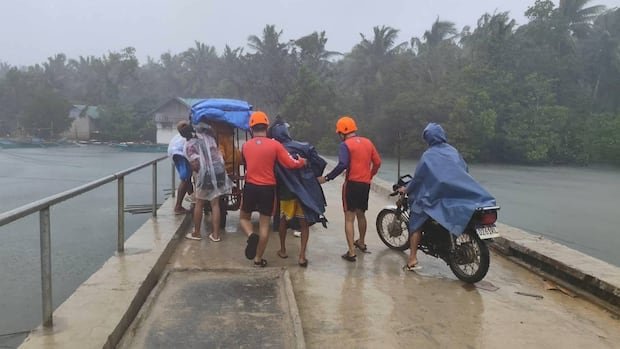
A powerful typhoon known as Fung-wong made landfall on the northeastern coast of the Philippines, causing two fatalities and prompting over one million residents to evacuate due to flood and landslide risks. The typhoon hit Dinalungan town in Aurora province with sustained winds reaching 185 km/h and gusts up to 230 km/h after unleashing intense rain and wind across the region.
This storm, the largest to threaten the country this year, covered a significant portion of the Southeast Asian archipelago with its expansive 1,600-kilometre-wide rain and wind zone. Fung-wong arrived from the Pacific as the nation was still recovering from the aftermath of Typhoon Kalmaegi, which claimed over 200 lives in central island provinces before moving on to Vietnam.
President Ferdinand Marcos Jr. declared a state of emergency due to the widespread destruction caused by Kalmaegi and the anticipated impact of Fung-wong, locally known as Uwan. The super typhoon prompted the evacuation of over 916,860 individuals from high-risk areas in northeastern provinces, particularly in the cyclone-prone Bicol region and near the active Mayon volcano.
Defence Secretary Gilberto Teodoro Jr. issued warnings about the potentially catastrophic effects of the approaching typhoon, emphasizing the need for immediate evacuation from vulnerable regions to mitigate risks of flash floods, landslides, and tidal surges. The Philippines did not seek international assistance at that time, but allies like the United States and Japan were prepared to provide support if necessary.
Local Red Cross chapters established over 500 evacuation centers housing nearly 21,000 families, with preparations in place for rescue operations and relief efforts. As the storm approached, power outages were reported in several eastern communities, signaling the disruptive impact of Fung-wong’s strong winds and heavy rainfall.
Authorities in northern provinces preemptively closed schools and government offices in anticipation of the typhoon’s impact. Reiza Dejito from CARE Philippines described the dire situation in affected areas, highlighting the challenges faced by communities that had already endured previous typhoon disasters.
Flight cancellations, stranded commuters, and warnings of life-threatening storm surges underscored the severity of the situation, with over 20 provinces at risk of significant coastal flooding. The Philippines’ vulnerability to natural disasters, including typhoons, earthquakes, and volcanic activity, reinforces its status as one of the most disaster-prone countries globally.

