
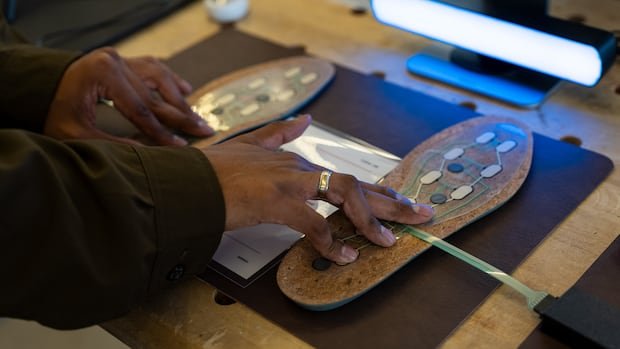
A company based in Toronto called Aurmada is among the many businesses and designers utilizing artificial intelligence (AI) to enhance clothing and footwear. They are exploring ways to integrate AI into garments to track various aspects, such as walking patterns and proximity detection. According to a recent survey by Leger, almost 40% of Canadians own wearable technology, with smartwatches being the most common. However, Aurmada’s CEO, Zavosh Zaboliyan, believes that clothing will soon incorporate technology beyond just accessories.
Zaboliyan co-founded Aurmada after experiencing a car accident injury that required him to relearn walking. Frustrated by the slow process of receiving medical feedback, he envisioned a solution to obtain real-time insights into his gait for immediate corrections. He emphasized the constant signals our bodies emit and the necessity for proper tools to interpret them.
AI embedded in clothing could potentially monitor vital signs, analyze movements, and even detect blind spots or nearby objects. Aurmada recently showcased its innovative designs, including shoe sole sensors for weight distribution analysis and clothing-embedded sensors acting as virtual assistants. The company is also exploring fabrics with metal components like copper and silver to shield sensors from external interference, with plans to integrate solar panels for self-powering capabilities.
Besides AI-infused products, Aurmada offers non-AI items like bulletproof shirts and electrically conductive socks for muscle stimulation. As designers experiment with integrating technology into fashion, the Fashion Institute of Technology’s DTech Lab in New York stands out for its innovative projects. These initiatives include garments with color-changing threads responsive to external stimuli and conductive fibers tracking physiological data to trigger comforting mechanisms.
While AI-enhanced clothing presents promising features for mainstream fashion and specialized fields like emergency response, privacy concerns and societal acceptance could hinder widespread adoption. Experts suggest that fashion and tech collaborations could lead to more stylish and practical wearable technology in the near future, potentially within the next five to eight years.
As the industry evolves, challenges related to data privacy and consumer skepticism may slow down the mass acceptance of AI-enhanced apparel. Despite the potential obstacles, the combination of fashion and technology is expected to yield more fashionable wearable tech options in the coming years, catering to a broader audience seeking both style and functionality.

