
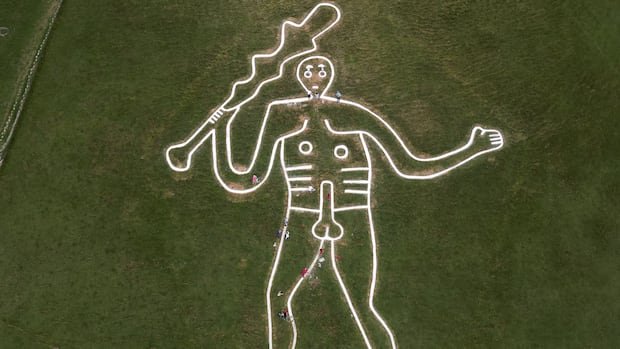
The residents of Cerne Abbas have a deep affection for the iconic naked, club-wielding giant etched into the Dorset hillside overlooking their village. However, due to consecutive warm, wet winters, the 55-meter chalk figure has become obscured by overgrown grass and algae, prompting over 100 volunteers from the National Trust to embark on a challenging restoration project under the scorching sun.
Liz Flight, the National Trust’s senior visitor experience officer, emphasized the strenuous nature of the task, describing it as laborious but necessary to preserve the beloved Cerne Abbas Giant. The figure, also known as “The Old Man” and “The Rude Man,” has mysterious origins dating back to the late Saxon period, between 700 and 1100 AD, contrary to previous beliefs linking it to ancient Roman times.
Flight highlighted the ongoing effort to maintain hill figures across the UK, including periodic touch-ups for the Cerne Giant every decade. Balancing conservation and cultural heritage, the National Trust carefully manages the restoration process to minimize landscape damage and protect the underlying archaeology.
This marks the fourth re-chalking of the Cerne Giant, accelerated by recent weather patterns that have accelerated grass and algae growth, necessitating earlier intervention than usual. Volunteers are diligently removing vegetation, clearing old chalk residues, and replenishing the figure with fresh white rocks. Despite challenges posed by the weather, the dedicated team is committed to completing the restoration promptly.
Flight, who previously worked on the project, acknowledged the physical demands of the task but emphasized its significance in maintaining the figure’s iconic presence on the hillside. The restoration efforts, though arduous, are a testament to the community’s dedication to preserving the Cerne Abbas Giant for generations to come.

