
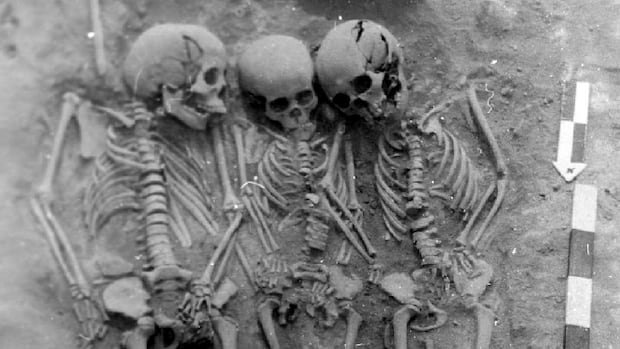
A long-standing enigma surrounding the burial of numerous deceased children by ancient hunter-gatherers in Russia 5,500 years ago has finally been unraveled by scientists. The revelation that these children fell victim to an early plague outbreak sheds new light on the nature of the disease.
According to a recent study published in Nature by an international team of researchers, including Canadian scientists, the bacterium Yersinia pestis, infamous for causing the Black Death in Europe during the 14th century, was already lethal to humans thousands of years prior. This finding challenges the belief that the plague only emerged much later in history and highlights its ability to spread among hunter-gatherer communities, not just settled populations.
Lead author of the study, Ruairidh Macleod, a postdoctoral researcher at Oxford University, expressed astonishment at the discovery of significant plague outbreaks among these ancient communities. The investigation was led by Andrzej Weber, an anthropology professor at the University of Alberta, and Angela Lieverse, an archaeology professor at the University of Saskatchewan, who have been studying the remains of a prehistoric hunter-gatherer society near Lake Baikal in Russia for several decades.
Lieverse’s expertise in analyzing human bones allowed the team to identify the age and sex of the remains, revealing a high proportion of children under 12 years old buried at one site. A collaborative effort with other scientists, including Macleod, who specializes in ancient DNA, led to the identification of the plague bacterium in the remains, shedding light on the tragic impact the disease had on these ancient communities.
Further genetic analysis unveiled a unique child-killing strain of the plague, containing a “superantigen” that triggered severe inflammatory complications, particularly affecting children. This strain lacked the genes necessary for flea-borne transmission, suggesting human-to-human spread during the outbreak at Lake Baikal.
The study’s findings emphasize the evolutionary nature of deadly pathogens like the plague and offer insights into their potential implications for future outbreaks. Lieverse reflected on the poignant narrative told by the ancient remains and DNA evidence, highlighting the tragedy faced by those who succumbed to the infectious disease.

