
In the past, a movie titled “The Day After Tomorrow” portrayed a scenario where the planet faces a sudden ice age due to a halt in the Atlantic Meridional Overturning Circulation (AMOC), a vital ocean current system. While the movie was fictional, the scientific basis behind the climatic event was rooted in reality.
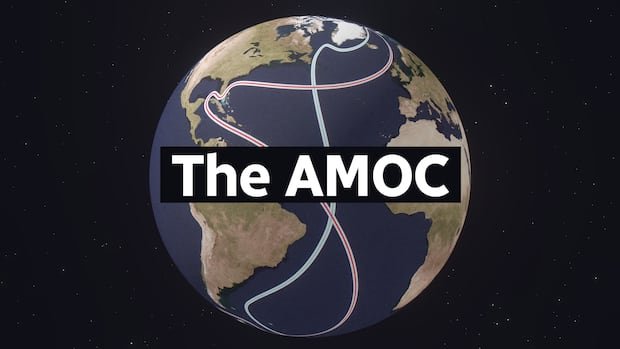
The AMOC is a crucial component of global ocean currents, acting as a conveyor belt that transports warm surface water into the North Atlantic before it sinks into the deep ocean and returns southward. This process plays a significant role in regulating global weather patterns and supporting marine ecosystems.
Recent studies, including one conducted by the University of Miami, have indicated a slowdown of the AMOC by 10 to 20 percent over the past two decades. Climate models have long predicted this slowdown, attributing it to global warming and its impact on ocean density and circulation patterns.
Researchers warn that a further slowdown of the AMOC, projected to reach 51% by 2100 under certain emission scenarios, could have far-reaching consequences. This includes disruptions to global agriculture, food production, climate systems, and a rise in sea levels along the North Atlantic coast.
Experts emphasize the need for continued research and data collection on the AMOC to better understand and prepare for the potential impacts. They advocate for urgent actions to mitigate climate change, emphasizing the importance of adhering to international agreements like the Paris Climate Accord to reduce the risks associated with a weakened AMOC.
The implications of a declining AMOC extend beyond climatic changes, with potential effects on storm intensity, marine ecosystems, and coastal communities in regions like Atlantic Canada. As the scientific community works to gather more information, the urgency of addressing climate change remains a top priority to safeguard future generations.

