
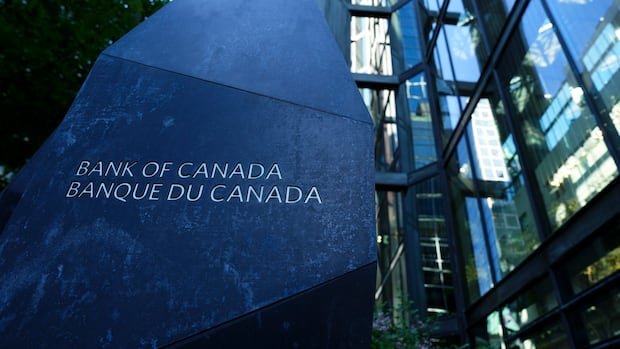
The Bank of Canada decided to maintain its key interest rate at 2.25 per cent on Wednesday, expressing confidence in the economy’s recovery following challenges earlier in the year. Despite ongoing risks from the Middle East conflict and trade negotiations with the U.S., the central bank officials are optimistic about the economy’s resilience.
Bank of Canada Governor Tiff Macklem stated that after a period of stagnation, economic growth appears to be back on track in Canada. The decision to hold rates was widely anticipated by economists, with all 36 surveyed by Reuters predicting the status quo, and most foreseeing no changes until at least July of the following year. This latest decision marks the sixth consecutive time the bank has opted to maintain interest rates.
While Canada experienced economic setbacks in the initial months of the year, the Bank of Canada now sees “clear signs” of growth returning in the second quarter. The bank had initially expected a 1.5 per cent annualized growth in the first half of the year, but the economy contracted, surprising policymakers. However, the bank’s latest monetary policy report indicates that the negative influences are diminishing as consumer and government spending show improvement, with a projected 2.5 per cent growth in the second quarter.
Anticipated growth in exports is also expected to bolster business investment in the upcoming months, as outlined by the bank. Despite a rise in inflation to 3.2 per cent in May, primarily driven by fuel and food prices, the Bank of Canada reassures that this spike is unlikely to lead to increased costs across other products. The bank foresees inflation remaining elevated in June before easing gradually, with a forecasted decline to 2.5 per cent in the latter half of 2026, eventually aligning with the two per cent target by early 2027.
However, Macklem emphasized the significance of developments in the Middle East on these projections. He warned that persistent high oil prices could potentially lead to broader inflationary impacts, hinting at the possibility of future rate hikes to combat prolonged inflation. The bank remains vigilant in ensuring that elevated oil prices do not result in sustained inflationary pressures.
The ongoing dilemma for the bank lies in balancing rising inflation and sluggish growth, where increasing interest rates could curb inflation but hinder growth. Yet, if inflation subsides and growth accelerates as expected, this dilemma may resolve itself. Despite some positive near-term forecasts, uncertainties, particularly fluctuating oil prices, continue to cloud longer-term optimism. BMO’s chief economist Douglas Porter anticipates the central bank maintaining a steady stance for the remainder of the year, emphasizing the bank’s cautious approach despite slightly hawkish rhetoric.

