
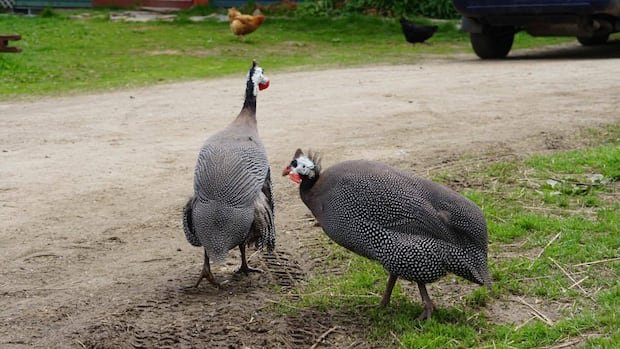
In Canada, as tick populations continue to spread, more residents in Nova Scotia are seeking solutions to safeguard their yards, turning to an unusual ally in the form of guinea fowl. These large, speckled birds, akin to chickens and turkeys, are gaining popularity for their insatiable appetite for insects, making them effective natural exterminators.
Heather Squires, a seasoned guinea fowl raiser in Lunenburg, Nova Scotia, has seen a surge in demand for the birds this year, with inquiries doubling compared to previous years. Selling around 70 baby guinea fowl, or keets, she has had to pause sales to maintain enough for tick control on her own property.
Despite being located in Lunenburg County, known for its tick population, Squires mentioned that tick sightings are rare on her farm. This boom in demand has attracted new breeders like Phalen MacLean from New Glasgow, who observed a notable decline in local tick numbers as her flock of 13 guinea fowl expanded.
Nova Scotia, identified as having the highest tick prevalence in Canada last year, has also witnessed an increase in anaplasmosis cases, a tick-borne illness, over the past decade. Bruce Rathgeber, a faculty member at Dalhousie University specializing in agriculture, acknowledged the historical use of guinea fowl for tick control but noted the current tick upsurge as unfamiliar.
Rathgeber highlighted that while the effectiveness of guinea fowl in reducing tick populations is subject to debate, based on his personal experience, they could serve as an additional control measure. He suggested that maintaining short grass and clearing wooded areas away from homes, as indicated by research, are more reliable tick management strategies.
Regarding breeding challenges, guinea fowl are known for their loudness, captivity breeding difficulties, and questionable intelligence. MacLean shared that the birds tend to nest in hidden spots and perch in trees even during snowstorms, making them vulnerable to predators. To address this, Squires recommended confining the birds indoors for three weeks to instill a habit of returning home at night, similar to chickens.
Both breeders stressed the importance of providing ample space for guinea fowl to roam freely, considering yard size and proximity to neighbors before acquiring the birds. They cautioned against keeping guinea fowl near busy roads due to the birds’ lack of road awareness, increasing the risk of accidents.

