
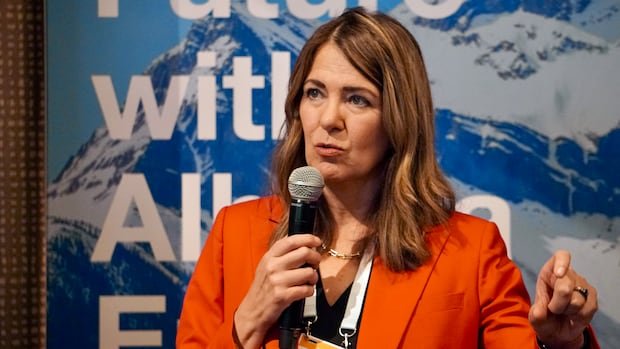
Alberta Premier Danielle Smith and Prime Minister Mark Carney are facing challenges in meeting the initial deadlines set in their energy and climate agreement, which includes plans for a new pipeline from Alberta to the West Coast. Smith mentioned delays during negotiations at the CERAWeek by S&P Global conference in Houston, Texas. The agreement, signed last November, grants Alberta special exemptions from federal environmental laws and shows political support for a new oil pipeline to the British Columbia coast.
The first set of deadlines in the agreement covers various aspects such as a cooperation agreement on impact assessments, methane equivalency agreement, carbon pricing equivalency agreement, and a trilateral memorandum of understanding with the Pathways companies. Progress has been made on the impact assessments cooperation, with announcements expected for the methane equivalency agreement. However, challenges remain in finalizing deals related to the industrial carbon tax and collaborating with oilsands companies on the Pathways carbon capture project.
The Pathways project aims to capture emissions from multiple oilsands facilities in northern Alberta, transporting them via pipeline to a terminal near Cold Lake for underground storage. While the companies involved have not made a final investment decision, Smith is optimistic about reaching an agreement with the Pathways group soon.
Industry concerns have been raised regarding industrial carbon pricing policies, with the Canadian Association of Petroleum Producers expressing worries about potential impacts on competitiveness. Despite these concerns, both Smith and Carney are committed to the agreement, which involves revising federal environmental policies to support the growth of the energy sector in Alberta and Canada.
Smith remains confident in foreign interest in the proposed oil pipeline project, considering potential investments from international companies and sovereign wealth funds. While no private companies have committed to purchasing or constructing the pipeline yet, Smith anticipates significant interest from various foreign stakeholders based on existing investments in Canada’s energy sector, citing examples like LNG Canada.

