
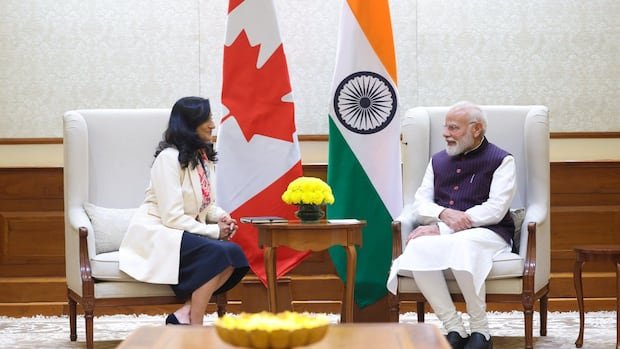
Canada and India have come to an agreement to enhance their bilateral relations, marking a positive shift two years after tensions arose due to the murder of a Canadian Sikh leader in Canada. Foreign Affairs Minister Anita Anand held discussions with Indian Prime Minister Narendra Modi and Indian External Affairs Minister Subrahmanyam Jaishankar in New Delhi, where they outlined a new roadmap for Canada-India relations.
Acknowledging the current global economic uncertainties and escalating geopolitical tensions, both countries emphasized the importance of a robust and enduring bilateral relationship. The joint release highlighted the necessity of fostering cooperation in various areas, including trade, investment, agriculture, science and technology, civil nuclear collaboration, artificial intelligence, critical minerals, and energy.
The recent agreement signals a mutual commitment to engage in ministerial-level dialogues on trade and investment soon. The parties emphasized that reviving this partnership would not only bolster economic cooperation but also address vulnerabilities stemming from evolving global alliances, secure supply chains, and strengthen strategic stability in a complex international landscape.
This renewed partnership follows a series of steps taken by both governments to thaw the strained relationship that originated from accusations made by former Prime Minister Justin Trudeau regarding the alleged involvement of the Indian government in the 2023 killing of Hardeep Singh Nijjar in Surrey, B.C. Nijjar was a prominent figure in the Khalistan movement advocating for an independent Sikh state in India.
India has refuted Canada’s allegations, resulting in reciprocal expulsions of diplomats by both nations. Under Prime Minister Mark Carney’s administration, efforts have been made to mend ties with India, including the appointment of new envoys by both countries following discussions at the G7 summit. Carney emphasized the importance of restoring diplomatic relations as a crucial initial step towards building mutual respect and cooperation.
The engagement between Canada and India has expanded to include discussions on transnational crime, repression, security, and upholding the rules-based order. Recent developments also indicate active collaboration between Indian law enforcement authorities and their Canadian counterparts, aimed at enhancing law enforcement dialogue and cooperation.
Despite these positive strides, Carney’s approach towards India has faced criticism from the Sikh community. The World Sikh Organization (WSO) of Canada expressed deep concerns over the joint statement’s lack of assurances regarding halting foreign interference and transnational repression. According to WSO President Danish Singh, Canadian Sikhs remain vulnerable to threats and criminal activities orchestrated by India, emphasizing the need to address ongoing transnational repression rather than settling for diplomatic appeasement.

