
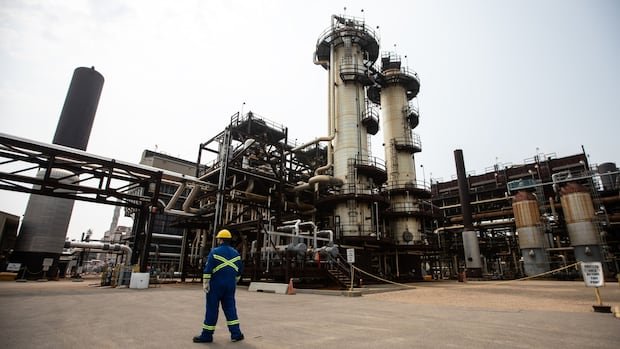
Leaders in Canada’s oil and gas industry are concerned that the proposed industrial carbon levy could diminish the country’s competitive advantage at a crucial time when global demand for reliable energy is high. Lisa Baiton, the head of the Canadian Association of Petroleum Producers (CAPP), emphasized that imposing an industrial carbon tax sets Canada apart as no other major oil-producing and exporting nation enforces such measures on its producers.
Baiton highlighted that ongoing conflicts in the Middle East have underscored the importance of Canada’s vast oil and gas reserves in ensuring global energy security. She expressed disappointment that instead of capitalizing on this strategic position, Canada is focusing on policies that increase costs and reduce competitiveness.
The 2026 BMO CAPP Energy Symposium in Toronto is taking place against a backdrop of efforts in Canada to expedite the development of oil and gas export infrastructure to target markets beyond the traditional reliance on the United States. The Alberta government intends to submit an application for a new West Coast crude oil pipeline this summer, with support from federal initiatives for projects deemed nationally significant.
A recent memorandum of understanding between the Alberta and federal governments outlines plans for a new British Columbia pipeline alongside an industrial carbon pricing mechanism to enhance the viability of the proposed Pathways carbon capture initiative. However, details regarding the carbon pricing and Pathways components are still pending resolution following the agreed-upon April 1 deadline.
Under the memorandum, Alberta aims to increase its industrial carbon price to $130 per tonne from the current $95. Discussions are ongoing regarding the pace of this increment. Studies suggest that oilsands producers could offset the additional carbon costs through higher revenues from increased exports to Asian markets facilitated by new pipelines.
Despite these potential benefits, Cenovus Energy CEO Jon McKenzie, who chairs CAPP’s board, believes that a carbon levy would not drive investment in decarbonization but instead hamper Canada’s competitiveness in the global market. Other industry leaders, like Birchcliff Energy Ltd.’s CEO Chris Carlsen, express concerns about the limited options for further emission reductions and the cumulative impact of higher carbon prices on their operations.
Experts like Mike Verney from McDaniel & Associates highlight Canada’s attractiveness as a global energy supplier amid international uncertainties and production challenges. With significant oil reserves and favorable economic conditions, Canada is positioned as a competitive player in the oil and gas sector. Nonetheless, challenges in project approvals and transportation infrastructure could impede the industry’s growth potential.
Randy Ollenberger, head of oil and gas research at BMO Capital Markets, acknowledges the cost-effectiveness of Canadian oil production but raises doubts about the conducive policy environment for expanding production capacity. Delays in project approvals, restrictions on oil transportation, and regulatory barriers could hinder Canada’s competitiveness in the global energy landscape.

