
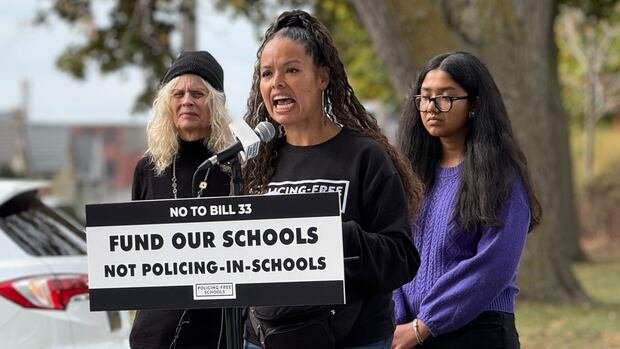
A small gathering of parents and community leaders gathered outside the Thames Valley District School Board (TVDSB) headquarters on Friday to express their opposition to the reintroduction of police officers in schools. The group was particularly concerned about Bill 33, known as the Supporting Children and Students Act, which mandates the reinstatement of school resource officers (SRO) in schools starting from next September.
Andrea Vasquez-Jimenez, the director of Policing-Free Schools, an organization advocating for the removal of police from educational settings across Canada and one of the protest’s organizers, criticized Bill 33 as a policy that prioritizes policing over education and student well-being. She argued that investing in policing does not enhance safety in educational environments, citing research and student accounts to support her stance.
The SRO program in London was discontinued in 2024 due to student apprehensions about surveillance and discomfort. Although only a few individuals attended the in-person rally, it was broadcast live by Policing-Free Schools. Xenia Osegueda, who participated in the protest, expressed concerns as a mother of a racially diverse son regarding the impact of police presence in schools. She highlighted the importance of schools being inclusive and safe spaces for all students and parents.
Instead of allocating funds to police presence in schools, Osegueda advocated for redirecting resources to more beneficial initiatives like counseling services and programs for special needs. Despite opposition from protesters, local police services in London and St. Thomas have expressed support for SRO programs, emphasizing the positive engagement between police and youth.
Protesters also condemned Education Minister Paul Calandra’s potential initiative to eliminate elected trustees from school boards. TVDSB trustees Lori-Ann Pizzolato and Marianne Larsen underscored the importance of local democracy and decision-making autonomy in education matters. They raised concerns about the centralization of power in the hands of the provincial government, which could undermine the role of locally elected officials in school governance.
The province’s intervention in TVDSB earlier this year, appointing a supervisor to address financial mismanagement and a significant budget deficit, raised further apprehensions about the loss of local control. Larsen highlighted chronic underfunding in public education as a core issue, emphasizing the significant budget shortfall in Ontario schools since 2018. In response, the province defended its funding record, emphasizing increased education funding and accountability measures to ensure resources are used effectively for students’ benefit.
Bill 33, addressing the presence of SROs in schools, underwent a second reading in June, with the education minister hinting at a plan to potentially remove trustees from school boards by the year-end. The ongoing debate underscores the complex interplay between policing, education, and governance in shaping the future of Ontario’s educational landscape.

