
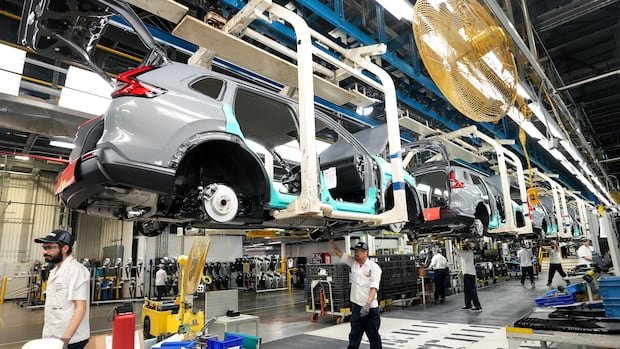
Honda Motor intends to formally cease the development of its $15 billion electric vehicle complex in Canada, as reported by various Japanese media outlets. The Japanese automaker halted progress on the Alliston, Ont., project in May of the previous year, stating that a review of the EV market would be conducted in two years before determining the project’s future.
With sluggish demand for EVs in the United States, Honda is planning to suspend the Canadian EV investment and shift its focus to making hybrids the centerpiece of its North American strategy. When asked for confirmation, Honda Canada mentioned in a statement that there were no updates to provide at the moment.
Although provincial and federal officials stated they are regularly communicating with Honda, they did not confirm being informed about the decision. The project, announced in 2024, was set to feature a vehicle assembly plant and battery production facilities, with anticipated funding of over $5 billion from federal and provincial sources.
Ontario Economic Development Minister Vic Fedeli emphasized that public funds would not be allocated to Honda unless the project moved forward. He highlighted that Honda has assured its commitment to Canada despite challenges in the auto sector due to tariffs and global uncertainties.
Fedeli underscored Honda’s 40-year history of manufacturing vehicles in Ontario and the province’s dedication to collaborating with Honda and other automakers to create more high-paying jobs in Ontario. Prime Minister Mark Carney acknowledged the industry’s challenges and reiterated the government’s commitment to supporting companies in the sector to reposition and reinvest, especially in light of U.S. tariffs impacting the auto industry.
Gabrielle Landry, spokesperson for federal Industry Minister Mélanie Joly, recognized the significant shifts in the automotive sector both in North America and globally. Landry attributed delays or reductions in EV investments to American tariffs and changes in U.S. domestic policies affecting automakers.
Major policy changes in the U.S., including plans to relax fuel efficiency standards and withdraw support for EV adoption, have dampened the anticipated adoption of zero-emission vehicles. Landry highlighted Canada’s auto strategy aimed at leveraging electrification for the benefit of the country’s vehicle industry while continuing to support and safeguard existing automotive facilities.
Honda’s reported decision to halt development is part of a pattern of several EV projects fizzling out in Canada, including General Motors discontinuing BrightDrop electric van production and Ford Motor Co. pivoting from EVs to pickup truck plans at its Oakville, Ont., plant. Conservative MP Adam Chambers criticized the government’s EV policy and urged a focus on securing access to the U.S. vehicle market to ensure the future of the Canadian auto industry.
In the previous year, Honda manufactured just over 400,000 vehicles in Canada, positioning it as the second-largest producer after Toyota. The production encompassed conventional gas and hybrid variants of its Civic and CR-V vehicles.

