
An air leak situation escalated on the International Space Station (ISS), leading to five astronauts seeking shelter and preparing for possible evacuation for about two hours on Friday. The incident occurred as Russia worked to address a crack on its part of the orbital laboratory, as reported by NASA.
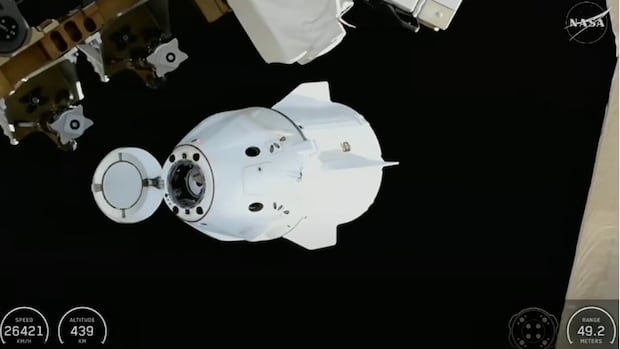
The Crew-12 mission astronauts, consisting of two American astronauts, a French astronaut, and a Russian cosmonaut, were directed by NASA mission control to enter their SpaceX-built Crew Dragon spacecraft docked to the station at 9:04 a.m. ET. Approximately two hours later, NASA allowed the astronauts to return to the station while monitoring the air leak situation.
NASA and Russia’s space agency, Roscosmos, who operate the ISS, have been in discussions for months on how to address small air leaks in Russia’s Zvezda service module, a critical part of the ISS where astronauts live and conduct experiments in space.
Former NASA chief astronaut Chris Cassidy, who led Expedition 63 on the ISS in 2020, noted that the air leak issue had been ongoing for several years, requiring collaborative efforts to find solutions.
Roscosmos reported detecting two leaks on the ISS, clarifying that there was no immediate danger to the crew. Measures were taken to seal the first leak promptly, with preparations underway to address the second leak without affecting the spacecraft’s systems.
The air leak rate on the ISS had recently doubled from one pound to two pounds per day, posing a challenge to the crew’s safety. The Crew-12 team, along with another mission crew, remained on the station, with plans to address the leaks and ensure the astronauts’ well-being.
Safe-haven orders, a rare protocol on the ISS, were implemented following disagreements on repair methods for the air leak. Crew members were directed to shelter in place and return to their designated spacecraft for safety measures until the situation was assessed.
NASA and Roscosmos collaborated to address the air leak concerns, aiming to find a lasting solution to maintain the ISS’s integrity. Efforts are underway to extend the ISS’s operational life until 2032, allowing time for the development of a successor space station.
Legislation in the U.S. Congress supported by key senators seeks to prolong the ISS’s lifespan and enhance U.S. space capabilities to counter China’s advancements in space exploration. Congressional leaders are working towards consensus on the proposed legislation to secure the future of space missions and research.

