
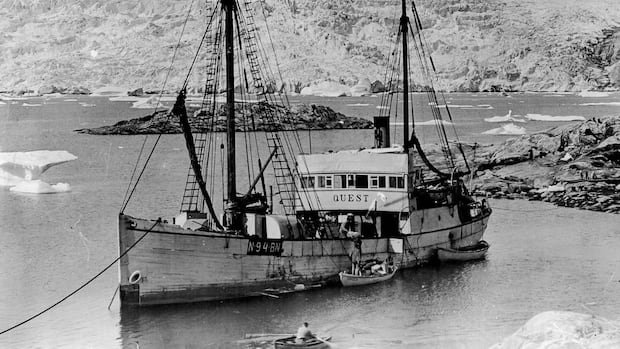
An expedition funded by the Royal Canadian Geographical Society (RCGS) is set to explore the wreck of the Quest, which sank in the Labrador Sea in 1962. Using innovative Canadian underwater imaging technology from Voyis in Waterloo, the researchers aim to create a detailed digital model of the ship before turning their attention to Terra Nova, the vessel that carried explorer Robert Falcon Scott to Antarctica.
CBC News will provide exclusive coverage of the 21-day expedition departing from Woods Hole Oceanographic Institute in Massachusetts on July 2. This marks a shift in underwater archaeology towards digitally documenting shipwrecks instead of physical recovery.
Renowned shipwreck hunter David Mearns, co-chief scientist of the expedition, views this opportunity to document the Quest and Terra Nova as a rare event. The Quest, which carried Antarctic explorer Sir Ernest Shackleton on his final journey, sank off the coast of Labrador in 1962. The expedition also aims to survey the debris field surrounding the wreck to uncover new insights.
The team will utilize lasers, stereo cameras, and advanced software to create a high-resolution three-dimensional model, known as a digital twin, of the ships and their surroundings. This approach, known as digital photogrammetry, is safer and more precise than traditional methods and allows for detailed analysis even after the expedition concludes.
Voyis, a company specializing in underwater imagery, will lead the imaging efforts, building on their experience with other famous shipwrecks like the Titanic and Endurance. The technology will provide real-time feedback on the scanning process, enabling researchers to capture crucial data efficiently.
Despite the excitement surrounding the expedition, success is not guaranteed due to challenges such as strong currents and poor visibility in the Labrador Sea. Remote operated vehicle pilots like Zach Melnick emphasize the need for meticulous planning and precise execution to navigate the complexities of exploring deep-sea wrecks.
The expedition represents a unique opportunity to merge cutting-edge technology with historical exploration, shedding new light on the mysteries hidden beneath the ocean’s depths.

