
Jennifer Cooper stumbled upon her first vertical drama while browsing TikTok. The advertisement for a melodramatic series introduced a storyline where a woman seeks revenge on her unfaithful boyfriend and hostile family by seducing her boyfriend’s affluent uncle. The themes of jealousy and romance reminded Cooper of the Chinese dramas she had been watching, prompting her to watch all the brief episodes before investing to see the conclusion.
Ultimately, the story concluded with the woman finding love and prevailing over her troublesome family. This experience led Cooper to start reviewing and creating content about similar series online, captivated by the abundance of narratives involving billionaire romances, authoritative figures, and vindictive vampires on the platform.
Welcome to the realm of microdramas – extravagant tales delivered in one to two-minute segments in a vertical format directly to your smartphone. Numerous apps are dedicated to this content, heavily promoted on social media platforms like TikTok. Despite each video being brief, the complete story typically unfolds over numerous segments, akin to a movie split into parts.
While the plotlines may be somewhat predictable, these videos are garnering significant attention, attracting interest from producers and talent in Canada who are embracing this emerging medium.
In Asia, the microdrama industry has flourished, surpassing traditional box office revenue in countries like China. Japan and South Korea are also delving into creating similar dramas, propelling the global microdrama industry towards an anticipated worth of $9.5 billion US by 2030. This surge in the microdrama sector has only recently begun making waves in North America, catching the eye of even established Hollywood studios.
Elaine Low, a TV journalist, draws parallels between the current microdrama trend and the now-defunct mobile streaming platform Quibi, which was short-lived in North America but found success in China. The popularity of microdramas has prompted traditional entertainment giants like Fox and Disney to engage with vertical production companies, recognizing the potential of this burgeoning market.
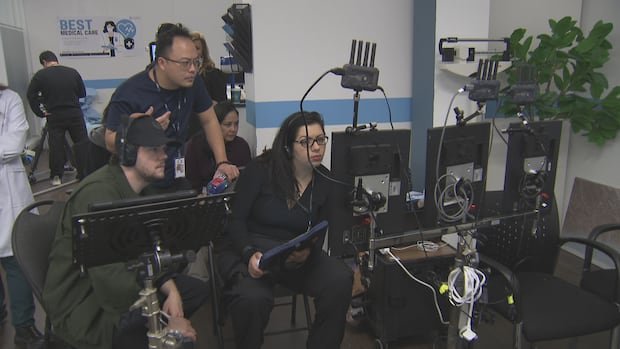
In Canada, the microdrama scene is also thriving, offering actors like Evan Bacic consistent work opportunities. Bacic, who transitioned to acting in vertical dramas full-time, highlights the fast-paced nature of microdrama sets compared to traditional productions. However, concerns exist regarding the lack of unionization in this sector, raising issues related to worker compensation and safety.
Industry professionals like Kate Ziegler are advocating for standardized guidelines to ensure fair pay, worker protection, and diversity in microdrama productions. Despite criticisms regarding the quality and representation in microdramas, industry insiders like Tim Zhou believe that the format holds immense potential for the entertainment industry, emphasizing the need for patience and skill development as the sector continues to evolve.

