
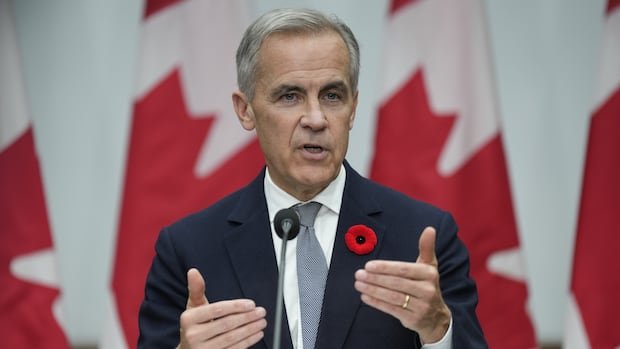
Prime Minister Mark Carney indicated his readiness to face an election if necessary to defend his government’s upcoming budget. The budget proposal is set to be presented in the minority Parliament next week, but the level of support from opposition parties remains uncertain.
Speaking at the conclusion of the APEC summit in South Korea, Carney emphasized the positive impacts of the government’s planned investments without explicitly addressing whether there are sufficient votes in the House of Commons to pass the budget. He expressed full confidence in the budget’s suitability for the current state of the country’s economy, emphasizing the critical nature of the global economic situation.
Failure to secure approval for the budget would trigger a national election shortly after the last campaign. When asked about his willingness to contest an election over the fiscal plan, Carney affirmed his commitment to standing up for what he believes is right.
Carney outlined the Liberal government’s intention to make long-term investments in the Canadian economy and infrastructure, with a focus on restructuring federal finances and aiming to balance Canada’s operating account within three years.
Opposition parties are deliberating their strategies, with the Conservatives grappling with the dilemma of supporting a plan they disagree with but indicating a willingness to go to the polls if necessary. Conservative Leader Pierre Poilievre has outlined specific demands, including axing the industrial carbon tax and keeping the deficit below $42 billion.
On the other hand, the New Democrats face challenges in aligning with the Liberals, particularly regarding defense spending increases and proposed program cuts in the coming fiscal years.
In a separate development, Carney acknowledged apologizing to U.S. President Donald Trump for Ontario’s anti-tariff advertisements that disrupted trade discussions. He expressed regret over the ad’s content and took responsibility for the incident, emphasizing the importance of maintaining positive relationships with foreign counterparts.
The Ontario government had aired a TV ad in the U.S. featuring excerpts from a speech by former President Ronald Reagan in support of free trade, which led to criticism from the Ronald Reagan Presidential Foundation and Institute and the subsequent breakdown of trade negotiations between Canada and the U.S.

