
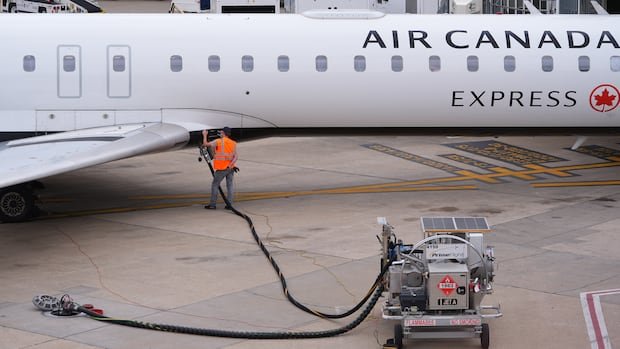
Air Canada has halted operations on six different flight routes, including both domestic and international services, due to the surge in fuel prices driven by the ongoing conflict in the Middle East.
The airline stated on Friday that the doubling of jet fuel prices since the start of the Iran conflict has made certain less profitable routes and flights economically unviable. Consequently, schedule adjustments, including frequency reductions, are being implemented in response.
Effective May 28, the service between Fort McMurray, Alta., and Vancouver will be suspended domestically, while the Yellowknife to Toronto route will be suspended starting August 30. Additionally, the service from Salt Lake City to Toronto will be temporarily suspended from June 30, with plans to resume in 2027.
Air Canada also announced the temporary suspension of flights from Toronto and Montreal to New York’s John F. Kennedy International Airport, starting June 1 and expected to resume by October 25. Despite these cuts, the airline assured passengers that it will continue to provide 34 daily flights between Canada and LaGuardia Airport in New York and Newark Liberty International Airport in New Jersey.
Furthermore, the planned route from Guadalajara, Mexico, to Montreal has been suspended by Air Canada. The airline will contact affected customers to provide alternative travel options. The overall impact on Air Canada’s planned capacity amounts to approximately one percent of the annual available seat miles.
These changes come at a time when the aviation industry is grappling with an unprecedented fuel crisis due to the prolonged U.S.-Israeli conflict with Iran. With fuel prices more than doubling, airlines like WestJet have already announced flight consolidations on lower-demand routes to adjust to the escalating costs.
Amid concerns raised by the head of the International Energy Agency regarding Europe’s dwindling jet fuel supplies, Air Canada and other airlines are taking measures such as fare increases and surcharges to mitigate the impact of rising fuel costs on their operations. Despite recent developments like the reopening of the Strait of Hormuz for commercial vessels, uncertainties surrounding fuel supply and pricing continue to pose challenges to the aviation sector.

