
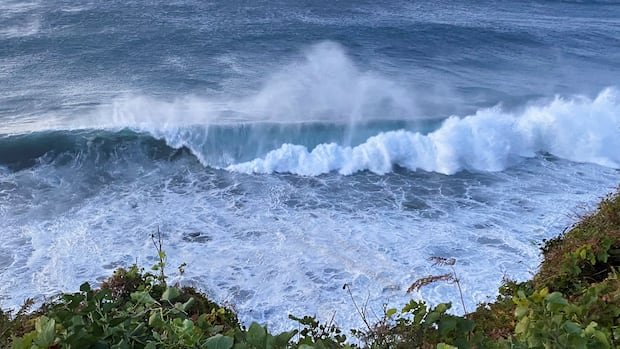
In the film “The Day After Tomorrow,” global weather patterns are thrown into disarray following a sudden shutdown of a critical Atlantic Ocean current. Devastating tornadoes hit Los Angeles, coastal New York is submerged by rising sea levels, and parts of the Northern Hemisphere are plunged into a deadly deep freeze almost instantly.
Although the movie is a prominent example of climate fiction, its concept is loosely rooted in actual scientific principles that researchers are taking seriously. The Atlantic Meridional Overturning Circulation (AMOC) is a key ocean conveyor belt that redistributes water globally, carrying warm water from the south Atlantic northward, where it cools and sinks. This circulation plays a crucial role in moderating Europe’s climate compared to regions like Canada at similar latitudes.
There are concerns that the AMOC could potentially collapse due to the impacts of climate change. The continuous emission of greenhouse gases into the atmosphere leads to higher global temperatures and subsequently warmer ocean temperatures, influencing the functioning of the AMOC.
As warm Atlantic water flows northward, it cools and evaporates, leaving behind denser saltwater that sinks before circulating back southward. However, rising sea surface temperatures and decreasing salinity levels in parts of the Atlantic are hindering this process. The influx of freshwater from melting Greenland ice exacerbates the disruption of the AMOC.
Research indicates conflicting views on the extent of the AMOC’s slowdown. Studies suggest potential consequences, including sea level rise and cooler temperatures in Europe, but the severity may not match the dramatic scenarios depicted in the movie. Experts like Wei Liu, a climate change professor, note evidence of the AMOC’s deceleration, prompting discussions on the long-term implications.
Various studies project different timelines for a possible AMOC shutdown, with recent assessments suggesting a significant slowdown by 2100. Scientists emphasize the need to address these risks, as even a partial disruption could lead to notable climate shifts and impacts on global weather patterns.
Despite concerns about the potential repercussions of an AMOC slowdown, experts are optimistic that a complete shutdown is unlikely in the immediate future. While uncertainties persist, efforts to educate the public on climate risks and the importance of mitigating greenhouse gas emissions are crucial for future generations.

