
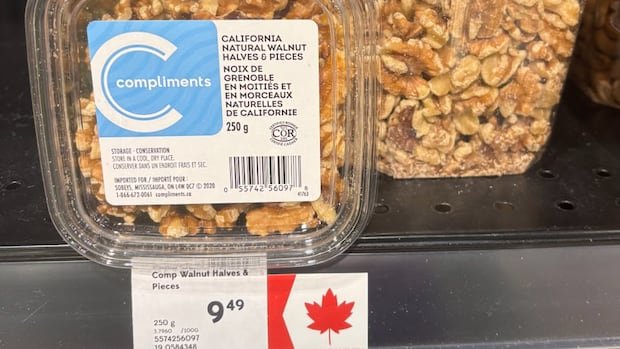
After more than a year since the inception of the Buy Canadian movement, major grocery chains Loblaw and Sobeys are under growing scrutiny for “maple washing,” which involves promoting imported products as locally sourced items. In January, the Canadian Food Inspection Agency (CFIA) fined two Loblaw-owned stores $10,000 each for maple washing. A month later, two other Loblaw-owned stores received formal warnings for the same offense.
Sobeys has also come under CFIA investigation regarding maple washing following multiple complaints. Although no fines were issued in this case, the federal regulator confirmed that corrective measures were taken. Notably, Sobeys seems to have phased out the red maple leaf symbol introduced last year to highlight Canadian products, as observed during recent visits to Sobeys and Safeway locations.
Consumer advocate Jay Jackson suggests that the CFIA’s ongoing investigation may have prompted Sobeys to remove the symbol, indicating a heightened level of scrutiny. As instances of maple washing continue to surface, there is increasing public demand for stricter enforcement against grocers found violating regulations.
Since early 2025, CFIA has identified 127 cases of retailers misleadingly promoting imported goods as Canadian. However, only two fines have been issued so far, both to Loblaw stores. Steve Palmer, who has filed multiple complaints regarding maple washing, expressed disappointment over the lack of penalties, emphasizing the importance of halting fraudulent labeling practices.
Federal regulations mandate that food labels and in-store signage must be accurate and not misleading. Recently, Loblaw-owned stores were fined for mislabeling foreign products as Canadian. While fines remain scarce, the CFIA issued warnings to two other Loblaw-owned stores for similar violations.
Despite federal rules defining “product of Canada” as items predominantly produced within the country, instances of misrepresentation persist. Calls for stricter enforcement and higher fines have been made by concerned shoppers like Palmer. However, limitations on penalties under current legislation raise questions about the effectiveness of regulatory measures.
In response to concerns, Loblaw emphasized its commitment to accurate labeling but acknowledged challenges in maintaining accuracy across a vast inventory from various suppliers. The company apologized for the mislabeled products and pledged to reinforce procedures to prevent future occurrences.
As the debate around maple washing and enforcement intensifies, stakeholders advocate for more stringent regulatory actions to combat misleading advertising practices. Consumers are encouraged to report instances of deceptive marketing to relevant authorities for further investigation and action.

