
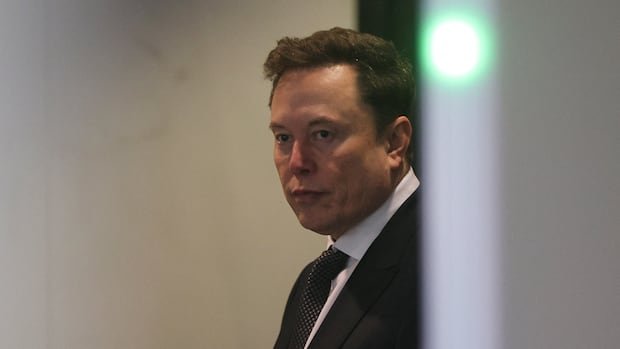
A U.S. jury has decided against Elon Musk in his legal action against OpenAI, ruling that the artificial intelligence company is not accountable to the world’s wealthiest individual for allegedly veering off its original mission of serving humanity. The jury’s unanimous decision, delivered at a federal courthouse in Oakland, California, stated that Musk’s lawsuit was filed too late and was decided in less than two hours.
The trial was viewed as a pivotal moment for the future of OpenAI and artificial intelligence, addressing questions on its ethical use and who should reap its benefits. AI is utilized across various sectors including education, facial recognition, finance, journalism, legal studies, healthcare diagnoses, and the creation of harmful deepfakes.
Following the verdict, Musk criticized the judgment as setting a “negative precedent” and revealed plans to appeal, emphasizing that the ruling did not delve into the core issues of the case but rather focused on a technicality related to timing. However, the judge cautioned that Musk’s challenge may face obstacles as the matter of whether the statute of limitations had expired before Musk’s legal action is a factual consideration.
In his 2024 lawsuit, Musk accused OpenAI, its CEO Sam Altman, and President Greg Brockman of deceiving him into providing $38 million, subsequently transitioning the organization from a non-profit to a for-profit entity without his knowledge and securing substantial investments from Microsoft and other parties.
OpenAI, co-founded by Altman, Musk, and others in 2015, witnessed Musk’s departure from its board in 2018, after which a for-profit sector was established in the subsequent year. Musk denounced the actions of OpenAI as “charity theft.”
The trial spanned 11 days and featured arguments that questioned the credibility of Musk and Altman. Both sides accused each other of prioritizing financial gains over public service. Musk’s attorney underscored doubts about Altman’s trustworthiness, highlighting witness testimonies that raised concerns about Altman’s credibility.
Musk alleged that OpenAI sought unjust enrichment at the expense of its non-profit status and neglected AI safety, contending that Microsoft was aware of OpenAI’s commercial motives from the outset. OpenAI countered by suggesting that Musk was primarily driven by financial aspirations and failed to promptly address OpenAI’s departure from its original commitment to develop safe AI for societal benefit.
OpenAI is positioned in competition with companies like Anthropic and xAI, gearing up for a potential IPO that could value the firm at $1 trillion. Microsoft’s substantial investment in OpenAI exceeds $100 billion, as confirmed by a Microsoft executive. Musk’s xAI venture is now integrated into his aerospace company SpaceX, which is also eyeing an IPO that could surpass OpenAI’s valuation.

