
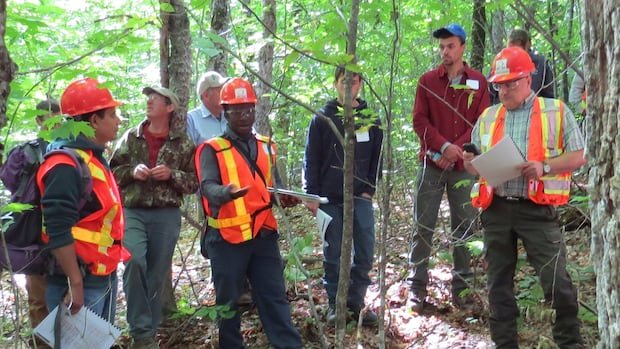
A research initiative led by New Brunswick is utilizing satellite imaging and artificial intelligence to locate and forecast the whereabouts of ancient forests with the aim of enhancing forestry management practices. The Northern Hardwoods Research Institute is spearheading the project, supported by funding from the Canadian Space Agency at its facility in Edmundston. By leveraging data from satellites that pass over the same forested regions weekly, the team aims to equip forestry managers with the necessary tools to safeguard old forests housing intricate ecosystems vital for the survival of various species.
Gaetan Pelletier, the institute’s executive director, emphasized the significance of identifying these special ecosystems proactively, highlighting the current lack of technological resources to pinpoint them before commencing harvesting activities. Through the utilization of satellites equipped with approximately 10 sensors for data collection, the team can monitor elements such as dead trees, windfall areas, and trees serving as habitats for specific species.
Among the species reliant on old forests, Pelletier noted the chimney swift as a prominent example. These birds seek out chimneys in urban settings or hollow trees in natural environments for nesting and roosting purposes. The executive director underscored the critical role of old forests as habitats for such species.
The research project is set to gather two layers of data using satellite technology: one to identify expansive forested regions likely to house hollow trees and another to pinpoint individual hollow trees. The envisioned outcome includes equipping harvester machines with real-time maps derived from the collected data, allowing navigators to avoid cutting down specific trees crucial for species like chimney swifts and brown bats.
The project’s timeline spans 18 to 24 months, with plans to commence testing solutions by March 2026. The team aims to finalize prototype map data for adoption by foresters throughout New Brunswick by the following autumn. This initiative is among the 20 projects nationwide that secured funding from the Canadian Space Agency, with the Northern Hardwoods Research Institute securing a $250,000 grant and estimating a total project cost of $500,000.

