
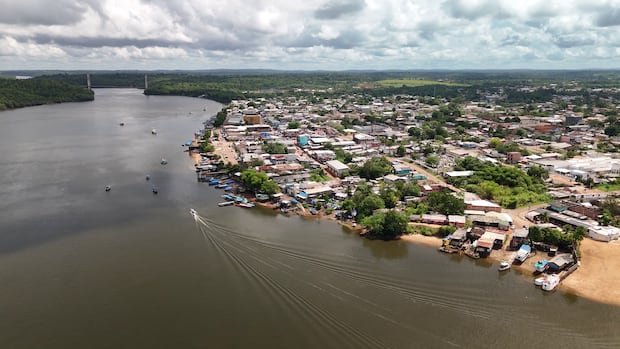
At the waterfront in Oiapoque, a border town near Brazil’s northern coastline, Cleidiney Ribeiro guides his boat into the river. “Oiapoque is on the brink of progress,” he expresses optimistically as he navigates towards the spot where the river converges with the Atlantic Ocean.
Brazil’s state-run oil firm, Petrobras, has recently commenced exploratory drilling 170 kilometers off the Amazonian shore, coinciding with Brazil’s inauguration of the COP30, the world’s largest climate conference in Belém. During the summit, Brazil’s President Luiz Inácio Lula da Silva emphasized the necessity of transitioning away from fossil fuels due to the Earth’s inability to sustain the current development model.
Despite this declaration, Brazil stands at the verge of a potential oil boom in the Foz do Amazonas basin, located 500 kilometers from the Amazon River’s mouth, drawing concerns from environmental experts like Suely Araújo from Brazil’s Climate Observatory. Araújo points out the contradiction in the government’s decision to escalate oil production amid the ongoing climate crisis.
President Lula, addressing the COP30, pledged to prioritize discussions on energy transition and allocate a portion of oil revenues towards sustainable energy initiatives. Meanwhile, in Oiapoque, anticipation for an oil discovery offshore is high among residents, hoping for an economic upturn in one of Brazil’s most underprivileged regions.
Local figures like Romeu Costa, overseeing Oiapoque’s airport, foresee a potential transformation in the city’s development if oil reserves are confirmed. Petrobras has been granted the rights to Block 59 for drilling, with additional oil blocks in the Foz do Amazonas basin auctioned off to companies like Exxon Mobil and Chevron. The potential oil reservoirs in Brazil’s equatorial region could hold up to 30 billion barrels, according to the National Agency of Petroleum, Natural Gas, and Biofuels.
Indigenous communities near Oiapoque, concerned about the environmental impact, have voiced opposition to the drilling activities. Chief Wagner Karipuna highlights the risks posed to their lands and water sources, emphasizing the potential contamination of their resources in case of an oil spill.
As preparations for COP30 continue in Belém, Indigenous groups are gearing up for protests to draw international attention to their objections. The ongoing debate reflects the complex interplay between economic development, environmental concerns, and the pressing need for energy transition in Brazil and globally.

