
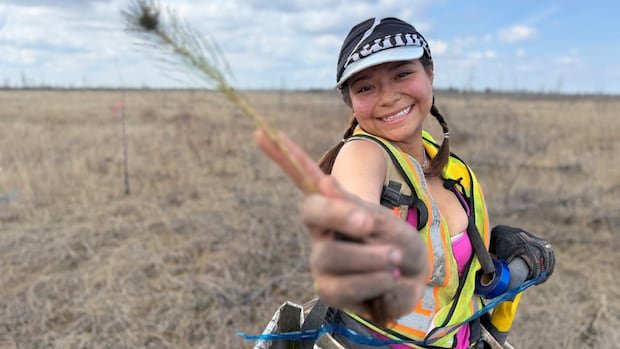
Marley Moose, a 22-year-old participant in a tree-planting crew in northern Manitoba, is dedicated to restoring forests devastated by wildfires. The crew’s mission has become more difficult due to the discontinuation of a federal initiative aiming to plant two billion trees by 2030.
In 2016, a forest in Manitoba’s Interlake region suffered from a jack pine budworm infestation, which was showing signs of regeneration before being ravaged by wildfires in 2021. Moose, involved in a tree-planting program by Nekoté LP, an Indigenous-owned corporation, expressed the importance of restoring life to these once vibrant areas.
The Canadian Tree Nursery Association (CTNA) reports that Canada is losing trees at a faster rate than they can be replenished naturally or through human efforts. Factors contributing to this loss include deforestation for development, lumber, and paper production, as well as the impact of pests like the mountain pine beetle. Wildfires have also significantly damaged Canada’s forests, requiring billions of seedlings for restoration.
The CTNA’s 2 Billion Trees Program, initiated by former Prime Minister Justin Trudeau, aimed to address tree depletion, but the program was canceled by the current government to reallocate funds towards defense and infrastructure. This decision jeopardizes tree-planting initiatives like the one led by Nekoté LP.
Amidst recurring wildfires and concerns about forest regeneration, industry experts are collaborating to find solutions following the program’s cancellation. Farron Sharp, a project manager with Blue-Green Planet Project, is seeking alternative funding to continue tree-planting efforts in collaboration with Nekoté LP and Canadian Kraft Paper.
Despite the challenges, individuals like Moose and Sharp remain committed to reforesting the land for future generations. Their work not only aims to counter the environmental impacts of deforestation and wildfires but also serves as a sustainable response to climate change and unsustainable practices.

