
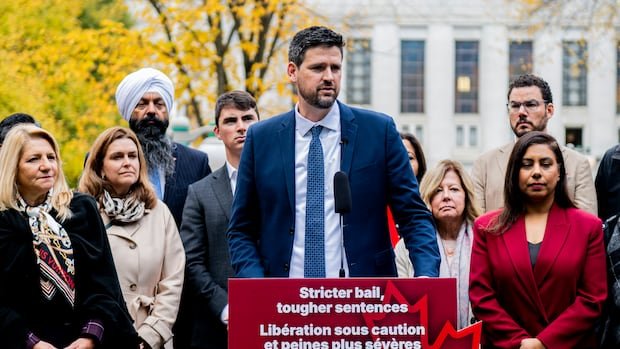
The federal Liberal government has unveiled modifications to the justice system aimed at prolonging the incarceration of certain offenders as part of efforts to reduce crime rates. The new legislation, C-14, introduces numerous targeted adjustments to the bail and sentencing structure in the federal Criminal Code, a move long advocated for by victims’ rights groups, police unions, and some provincial leaders.
These adjustments come in response to a recent rise in violent crime, although crime rates saw a slight decrease last year following a post-COVID surge. The proposed changes, presented by Justice Minister Sean Fraser, seek to make bail more challenging to obtain, particularly for repeat and violent offenders. They introduce new “reverse onuses,” where detention becomes the default choice, requiring bail seekers to justify why they should not be held in custody pending trial.
If enacted by Parliament, these new reverse onuses will pertain to individuals facing charges related to violent crimes or organized crime such as car theft, break and enter, human trafficking, assault, sexual assault involving specific elements, and violence-related extortion. The government instructs the courts to thoroughly assess the bail plans of individuals involved in these reverse onus cases to ensure the proposals for release are credible and dependable.
Fraser emphasized that the bill aims to enhance public trust in the justice system and prevent dangerous individuals from freely roaming the streets. The legislation also refines the “principle of restraint,” which mandates judges to release certain accused individuals on bail at the earliest suitable opportunity and with minimal conditions, although it sharpens this principle significantly.
Furthermore, the bill instructs courts to consider specific factors when deciding on release, particularly in cases involving random or unprovoked violence, to prioritize public safety and victim protection. The proposed laws, which include stricter bail conditions and sentencing guidelines, follow notable criminal incidents involving individuals released on bail who went on to commit serious offenses.
The government is confident that these new measures will withstand constitutional scrutiny, despite potential legal challenges. Conservative Leader Pierre Poilievre criticized the reforms, suggesting they may not be stringent enough to address what he perceives as the repercussions of previous Liberal crime policies.
Regarding sentencing, the bill urges courts to adopt a tougher stance on repeat and violent offenders, advocating for lengthier prison terms. It introduces consecutive sentencing, requiring individuals to serve one sentence after another, rather than concurrently for multiple offenses. The legislation also toughens penalties for crimes against first responders, retail theft, and infrastructure-related offenses, while eliminating house arrest for specific sexual assault and child sexual offense cases.
In addition to bail and sentencing adjustments, C-14 proposes measures to expand the detention criteria for accused individuals under 18, aiming to address an increase in youth crime. Justice Minister Fraser positioned these changes as part of a comprehensive strategy that includes increased law enforcement personnel, investments in community support programs, and enhanced social services to prevent criminal behavior.
Discussions are ongoing regarding the financial implications of these proposed changes on provincial jails, as more individuals could be held in provincially run facilities, necessitating collaboration between federal and provincial authorities to address shared concerns.

