
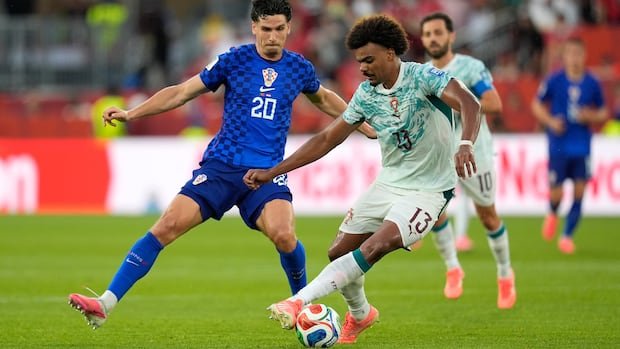
Toronto experienced extreme heat and humidity during the last World Cup match on Thursday between Portugal and Croatia. The conditions neared the threshold recommended by global soccer guidelines for game delays due to the “wet bulb” temperature. Earlier matches in the tournament had already faced delays, raising concerns about player health risks.
The match in Toronto Stadium saw Portugal defeating Croatia 2-1 in the Round of 32, commencing at 7 p.m. ET. Downtown Toronto recorded a temperature of 27 degrees Celsius with 67% humidity, translating to a perceived temperature of 35 degrees Celsius according to Environment Canada. Earlier in the day, temperatures peaked at 35 degrees Celsius, feeling like 42 due to a heat dome over southern Ontario and Quebec.
The scorching conditions led the city to cancel a popular public viewing event at Nathan Phillips Square for World Cup matches. FIFPRO, representing professional footballers, provides guidelines for extreme heat based on the “wet bulb globe temperature” (WBGT). According to these guidelines, games should be delayed if the WBGT exceeds 28 degrees Celsius or if the ambient temperature surpasses 36 degrees Celsius to ensure safety for players, officials, and fans.
Kate Hutchins, a postdoctoral researcher at the University of Ottawa, emphasized the importance of such guidelines in mitigating the impact of extreme heat on athletes. Running generates significant metabolic heat, hindering the body’s cooling mechanism. When the WBGT matches or exceeds body temperature (about 35 degrees Celsius), the body struggles to dissipate heat effectively, posing life-threatening risks.
The WBGT considers factors like temperature, relative humidity, sun exposure, and wind, providing a comprehensive assessment of environmental conditions. In comparison, the Humidex, measuring perceived temperature discomfort, lacks a direct conversion to WBGT. Both indices have soared in southern Ontario and Quebec, prompting caution against heat-related illnesses like heat stroke and exhaustion.
When the body fails to regulate its temperature, core body temperature rises, leading to performance decline and potential heat-related illnesses. Recognizing symptoms of overheating, seeking shade, and staying hydrated are crucial preventive measures. Vulnerable individuals, such as the elderly, require special attention during extreme heat conditions.
Despite concerns over player health, FIFA has not specified a temperature threshold for match postponement. As the tournament progresses, monitoring heat stress and player well-being remains a priority. FIFPRO plans to address these issues further in an upcoming news conference, acknowledging the challenges in ensuring player safety amidst competition formats and infrastructure constraints.

