
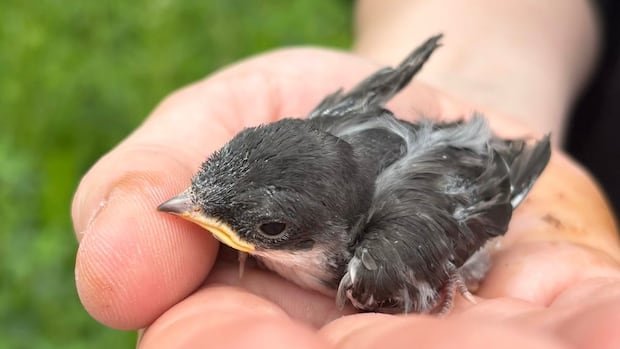
A protected area known as Long Point Bird Observatory situated on a 40-kilometer sandspit near Lake Erie in southwestern Ontario, designated as a UNESCO Biosphere Reserve, is home to diverse wildlife. This sanctuary, which is the oldest continuously operating bird sanctuary in North America, is facing disruptions in its natural ecosystem due to climate change.
Recent research published in the Proceedings of the National Academy of Sciences in the U.S. on June 24 revealed concerning trends among the tree swallows at Long Point. Since monitoring began in 1969, the tree swallows have been laying fewer eggs and experiencing a reduction in body size. Additionally, aerial insectivores like tree swallows have declined by 43%, while the insect population has decreased by over 60% since 1977. The study was a collaborative effort between researchers at the University of Michigan and Birds Canada, utilizing historical data from Long Point Bird Observatory.
Lead author of the study, Charlotte Probst, a PhD student at the University of Michigan’s School for Environment and Sustainability, emphasized the significance of tree swallows as a model organism for study due to their nesting habits. The research highlighted a phenological mismatch caused by climate change, where insects are emerging earlier in the year due to rising temperatures, creating a disconnect with the timing of bird migration and breeding.
Matthew Fuirst, a research ecologist at Birds Canada and co-author of the study, noted that decreased insect abundance negatively impacted the condition of nestlings and adult swallows, leading to smaller body sizes and reduced egg laying. The timing mismatch has been progressively widening since 1977, with consequences for the ecosystem.
In a separate study, Hadil Elsayed, a PhD candidate at York University, observed the early emergence of insects at Long Point due to temperature increases. The decline in insect populations, attributed to changes in vegetation and climate, poses a significant challenge for bird species like tree swallows.
While addressing climate change requires global cooperation, Probst, Fuirst, and Elsayed suggest local actions to mitigate insect declines. Planting native wildflowers, reducing pesticide use, and preserving vegetation can help maintain insect habitats and support bird populations. Recognizing the interconnectedness of ecosystems, they emphasize the importance of addressing insect declines to safeguard the biodiversity of Long Point Bird Observatory.

