
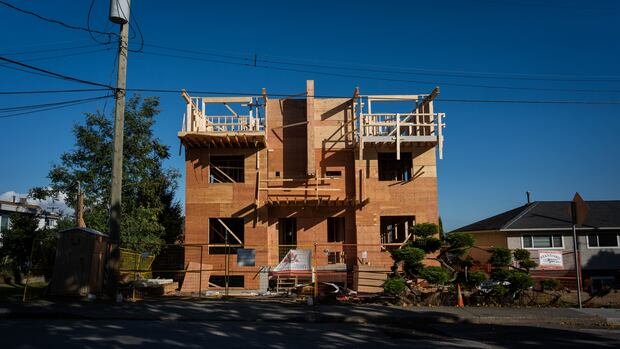
Public outcry regarding the expanding size of new multiplex residences in Burnaby, B.C., has prompted city officials to revise regulations governing construction. As a result, the multiplex homes in the city will now be smaller and include more on-site parking.
Introduced in July last year, multiplex housing in Burnaby allowed for four to six homes on single-family lots, in compliance with provincial guidelines. This change permitted multiplex homes on all of Burnaby’s 31,000 former single-family residential properties.
Initially, builders under Burnaby’s multiplex bylaw could construct homes up to four stories high, including laneway homes, triplexes, quadplexes, and cottage courts. However, following a recent council decision, future multiplexes will be limited to three stories, with floor areas reduced by 33 to 60 percent.
Furthermore, developers are now mandated to provide a higher minimum amount of on-site parking. Residents, such as Tim O’Meara and Kathy Corrigan, have expressed concerns about the visual impact and scale of these new multiplex homes. They fear adverse effects on property values and the aesthetics of their neighborhoods.
Mayor Mike Hurley acknowledged residents’ concerns and emphasized the city’s willingness to address them. He highlighted the need for a balanced approach to multiplex construction, aiming for homes between 1,400 and 1,900 square feet to better align with community standards.
Despite facing backlash, Bryn Davidson, co-owner of Lanefab, a company specializing in custom homes and multiplexes, praised Burnaby’s innovative approach to housing development. He noted the expected resistance to change but emphasized the importance of evolving urban landscapes to meet housing demands.
The Ministry of Housing reiterated the necessity for diverse housing options in neighborhoods and commended Burnaby for its leadership in adopting multiplex housing. The ongoing dialogue between residents, builders, and policymakers reflects the evolving dynamics of urban planning and community development.

