
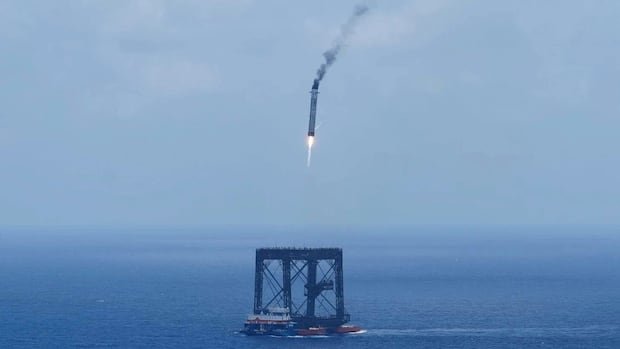
China’s space program achieved a significant milestone as the country successfully landed the first stage of a Long March-10B rocket into the sea following a launch on Friday. This marks the first instance where China has recovered the initial stage of a rocket, a feat previously accomplished by companies like SpaceX and Blue Origin. SpaceX, led by Elon Musk, has been reusing booster rockets since 2015, with over 600 successful landings to date. The company aims to reduce launch costs through rocket recycling.
SpaceX’s latest achievement includes capturing the heaviest rocket booster intact, showcasing the technical marvel of the Starship rocket and the cost-saving potential of reusability. Blue Origin, founded by Jeff Bezos, has also been recovering its rocket boosters, with plans to expand its operations in Texas and Florida.
Following China’s successful rocket landing, Japan is poised to make its mark in the rocket recycling trend with a launch and landing attempt scheduled for the upcoming weekend. The reusable configuration of China’s Long March rocket can carry payloads of up to 16,000 kilograms into low Earth orbit (LEO), while SpaceX’s Falcon 9 has a maximum payload capacity of 22,800 kilograms. Falcon rockets are crucial for transporting astronauts and supplies to the International Space Station, with the Falcon Heavy capable of launching up to 63,800 kilograms to LEO. Blue Origin’s New Glenn rocket can launch payloads of up to 45,000 kilograms.
In a similar development, Rocket Lab USA, a smaller launch company, achieved a milestone in 2022 by capturing its first-stage rocket with a helicopter before safely dropping it into the ocean. With these advancements in rocket reusability, the space industry is witnessing a new era of innovation and cost-efficiency.
Source

