
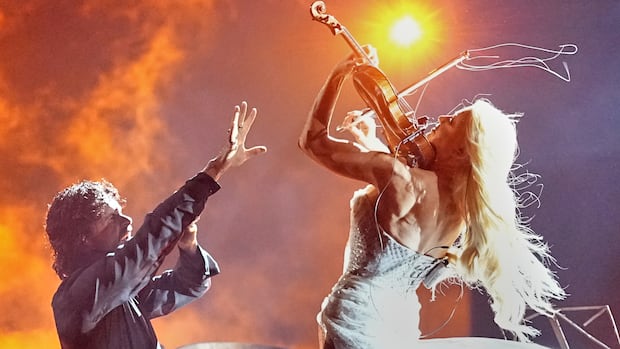
Dedicated Eurovision fans are well aware of the exciting journey that awaits Canada as it gears up for its inaugural participation in the Eurovision Song Contest.
For those unfamiliar, here’s a quick overview.
The path to the Grand Final begins with the selection of a single entry to represent Canada.
This can occur through two methods: a public process where Canadians vote for the act, or an internal selection where a committee chooses the song and artist.
CBC/Radio-Canada has indicated that no official information will be available until autumn.
However, during his Canada Day speech, Prime Minister Mark Carney mentioned that at least part of the selection process will involve public participation.
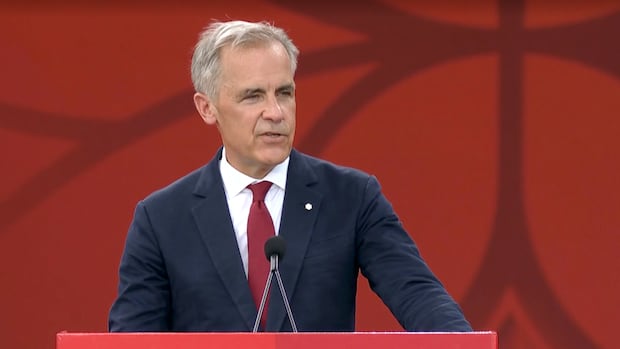
When Prime Minister Mark Carney announced Canada will be entering the 2027 Eurovision Song Contest, he revealed Canadians will be given an active role in choosing the national submission.
“You will determine, and it’s going to be a challenging decision. You will choose which Canadian artist will first step onto that Eurovision stage under our flag,” he stated.
It remains unclear if this will involve a nationwide talent search, a committee narrowing down options, or Canadians selecting a performer for a song composed by Canadian artists. Each country has its unique approach.
Engaging the public
For a nation that is just starting its Eurovision journey, involving the public from the outset has clear advantages.
A public competition would showcase “a variety of artists competing for the affection of Canadians, and ultimately, Canadians will vote for who they believe should represent them,” noted Toronto Eurovision superfan and content creator Shawn Myers.
He described this option as “an incredibly thrilling approach.”

Austrian bearded drag queen wins European song contest with power ballad Rise of the Phoenix
For many years, Myers has witnessed the contest bring people together as they cheer for their respective national entries, but this requires a substantial audience.
A public competition serves as an effective method for helping Canadians “feel included in the journey,” said Martina Ziesack, a Swiss-Canadian television producer at the Swiss public broadcaster SRF, who contributed to the production team for the 2025 Eurovision Song Contest in Basel.
“I believe a significant part of the enjoyment stems from having an event in the home country and experiencing the evolution of the performers,” she added.
The argument for internal selection
In Switzerland, the preparation period kicks off in August with songwriting camps and workshops. The songs are assessed, market research is conducted, various artists are matched with different songs, and each undergoes on-camera evaluation.
The extensive process culminates in a delegation selecting the best song and performer, all aimed at achieving victory.

Veronica Fusaro represented Switzerland at the 70th Eurovision Song Contest in Vienna this year, after a lengthy internal selection process to become her country’s Eurovision performer. (Martin Meissner/The Associated Press)
The advantage of this method is that it does not depend on one nation’s voters aligning with the preferences of global audiences. What may succeed in Switzerland’s national final might not resonate in the boundary-pushing, often highly creative Grand Final of Eurovision.
However, Ziesack believes Canada need not be overly concerned about this at this stage.
“I believe Canadians are exceptional music connoisseurs, highly creative, and there’s such a diverse range of music,” she remarked. “I feel that the public appreciates that wide, creative, and vibrant mix.”
Canada, along with other competing nations, will have a strict deadline for making their selections, typically in March.
Regardless of the selection method, the chosen songs and artists must adhere to criteria established by the European Broadcasting Union. The regulations for 2027 have not yet been disclosed.
Capturing Eurovision fans’ attention
Once Canadians have embraced their entry, the next challenge is to win over audiences in Europe and beyond. As Myers puts it, this involves “immersing oneself in the extraordinary, vibrant Eurovision universe.”
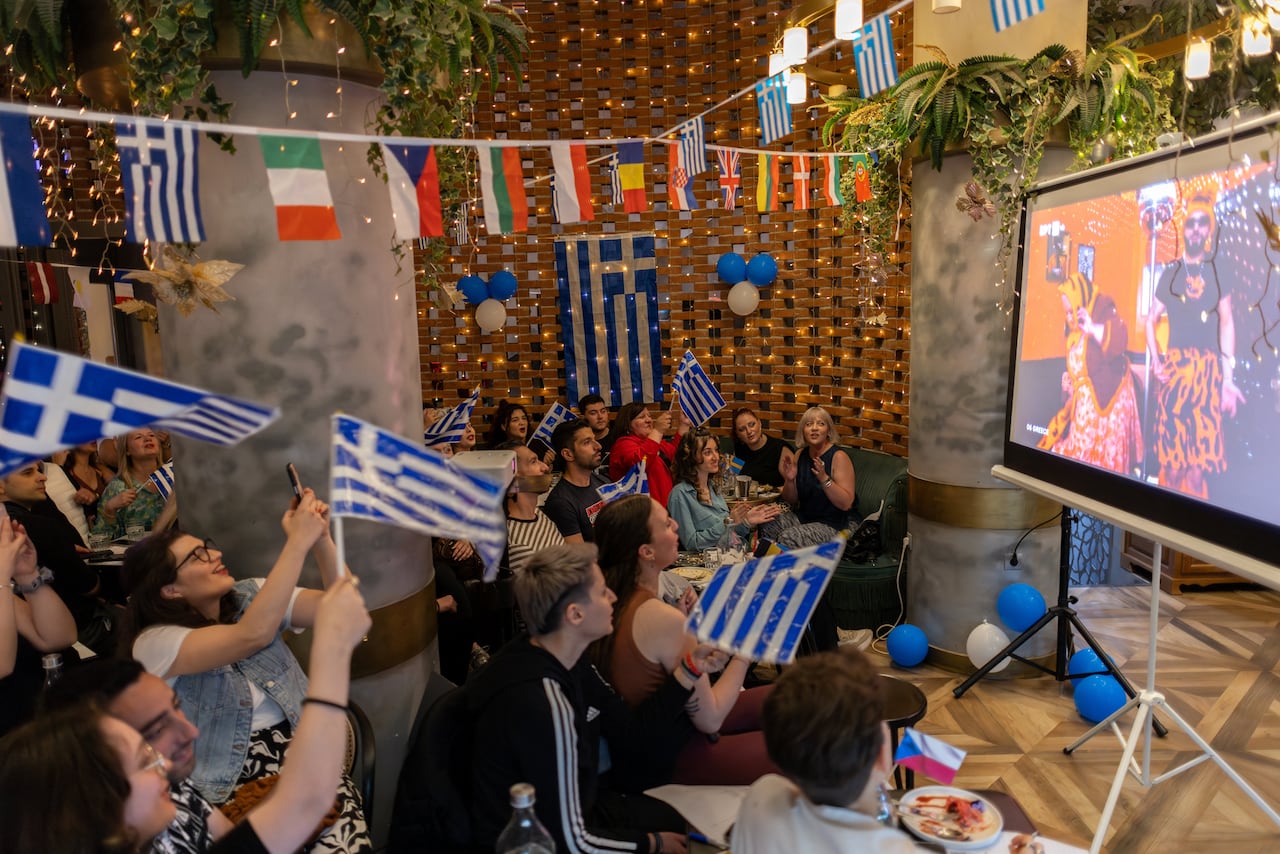
Eurovision fans wave Greek flags as they watch Greece’s contestant Akylas perform during the Eurovision Song Contest final at a cafe in Athens, May 2026. (Stelios Misinas/Reuters)
The fanbase of the contest is extensive and passionate, with fans eager to learn about the songs and performers before the semifinals.
The Canadian representative will be expected to attend pre-parties throughout Europe, engage in international media interviews, and possibly collaborate with contestants from other nations on platforms like TikTok — anything necessary to garner support leading up to the voting day.
The upcoming Eurovision Song Contest is slated to take place in either Burgas or Sofia, Bulgaria.
While the host city remains undecided, artists and their delegations will arrive there for rehearsals prior to the contest commencing in May 2027.

Eurovision 2026 winner Dara of Bulgaria holds the competition’s top prize, a large crystal microphone. (Valentina Petrova/The Associated Press)
What defines a successful Eurovision entry?
Myers asserts that the leading performers typically embody three key elements: excellence, memorability, and cultural significance.
Excellence can refer to powerful vocals — “vocal techniques and acrobatics tend to excel in this competition,” he noted. Memorability may stem from “spectacular staging, fireworks, and props.” Cultural significance can encompass unique aspects, such as Bulgaria’s traditional Balkan rhythms or Norway’s incorporation of Indigenous Sámi chanting known as yoiking.
“You require something that … distinguishes you from the rest,” Myers emphasized, insisting that just one of these three components is insufficient.
After all the strategizing, rehearsals, and performances, the ultimate reward is primarily exposure and bragging rights.
The victor receives a crystal trophy and the opportunity to perform their song once more, while their home country earns the privilege of hosting the subsequent year’s contest.

