
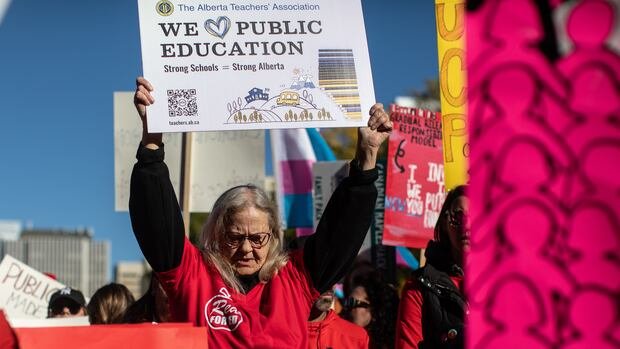
A recent survey conducted by the Angus Reid Institute indicates that teachers locked out amid a contract dispute in Alberta are receiving more public support compared to the provincial government, leading to the cancellation of classes for a second consecutive week. The online poll, with over 800 respondents from Alberta participating last Wednesday, Thursday, and Friday, revealed that 58% of the public empathizes with the Alberta teachers. In contrast, 21% of those surveyed expressed support for the government’s stance, while 18% remained neutral.
Shachi Kurl, the president of the Angus Reid Institute, emphasized the significance of understanding public opinion as negotiations resume between the parties. Kurl highlighted that public sentiment could influence the willingness of either side to settle or strengthen their position during discussions.
Approximately 51,000 teachers from public, Catholic, and francophone schools in Alberta initiated the strike on October 6 after rejecting the latest contract offer from employers. The dispute revolves around concerns regarding teaching and learning conditions, class sizes, support for students with additional needs, and salaries that do not keep up with inflation, as stated by the Alberta Teachers’ Association.
The Teachers’ Employer Bargaining Association (TEBA), representing school boards and the government, imposed a lockout on teachers last Thursday, resulting in the continued cancellation of classes for an estimated 750,000 kindergarten-to-Grade 12 students across the province.
The survey, conducted online by Angus Reid, involved 807 participants who are members of the institute’s forum. According to the Canadian Research Insights Council, online surveys lack a margin of error as they do not use random sampling methods. The poll also inquired about respondents’ parental status, voting behavior in the 2023 provincial election, and their opinions on various education-related issues.
The results indicated that NDP voters were more inclined to support teachers in the contract dispute, with United Conservative Party voters showing more support for the government. The survey findings highlighted concerns about class sizes, teacher salaries, and dissatisfaction with the government’s management of education in the province, potentially influencing bargaining dynamics.
Lori Williams, an associate professor at Mount Royal University, noted that the poll results could impact the negotiation strategies of both parties. The survey suggested that the government’s messaging leading up to the strike failed to resonate with most Albertans, who are more supportive of teachers.
Amrit Rai Nannan, a middle school teacher and union president, echoed the sentiments reflected in the poll results, emphasizing the widespread support for teachers in the community. Rai Nannan highlighted the challenges posed by large class sizes and expressed optimism that the survey results would prompt meaningful action to address these issues.
The ongoing conflict between teachers and the government may have implications for the upcoming provincial election, depending on how the situation unfolds in the coming days and weeks. Alberta’s Education Minister, Demetrios Nicolaides, acknowledged the impact of the strike on students and families, emphasizing efforts to address the complexities in classrooms.
Overall, the survey results underscore the public’s concerns regarding education in Alberta and the importance of addressing key issues to ensure quality learning environments for students.

