
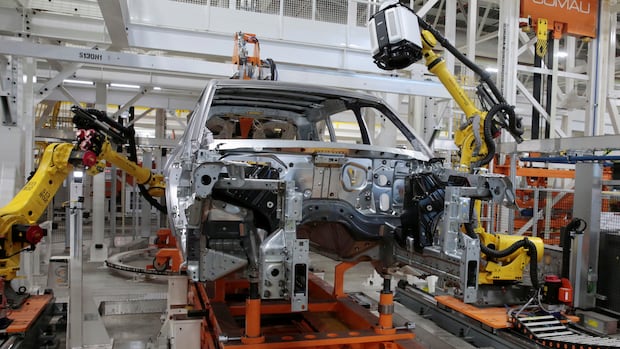
Automakers in Detroit are set to present their case to the Trump administration, arguing that the proposed changes to the North American trade agreement could result in billions of dollars in losses and decrease their ability to compete against foreign competitors.
American car manufacturers continue to grapple with the various tariffs imposed by the administration last year, which include taxes on steel and aluminum, car parts, and vehicles imported from Mexico and Canada. They assert that competitors from Japan, South Korea, and Europe are benefiting from lower tariff rates.
Currently, U.S. auto leaders are concerned that the proposals being discussed ahead of the upcoming trade talks with Mexican officials next month could further increase their costs.
A particularly contentious issue for the automakers is the U.S. government’s requirement that vehicles include at least 50 percent U.S.-manufactured content in order to qualify for reduced tariffs, as reported by Reuters in May. This condition, along with a suggestion to elevate the total North American vehicle content from the existing 75 percent, is estimated to add at least $2 billion USD annually to the expenses of each auto manufacturer in Detroit.
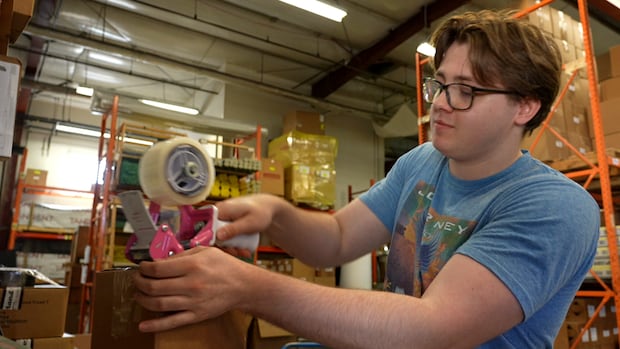
Canadian companies vulnerable to new 50 per cent U.S. tariffs are rushing shipments and hoping a breakthrough deal will avert the punishing levies before the August 19 deadline.
These additional costs would be layered on top of the financial burdens already faced by the manufacturers due to the existing tariffs.
The U.S. Trade Representative’s office did not provide a comment when requested. Officials from the administration have indicated that their tariff policies are intended to encourage greater investment and job creation within U.S. factories.
General Motors anticipates that its total expenses related to tariffs will amount to between $2.5 billion USD and $3.5 billion USD this year, which could represent over 20 percent of its operating profit.
Ford Motor Company has estimated its tariff-related losses to be around $1 billion USD for the current year.
Ford’s latest onshoring
In a clear indication of its commitment to increase domestic production, Ford announced on Wednesday its decision to relocate the manufacturing of Lincoln models for the U.S. market from China to American factories, citing the tariffs imposed by the Trump administration as a significant factor.
Ford CEO Jim Farley mentioned to Reuters that the company may have initially underestimated the administration’s dedication to boosting U.S. auto production. However, he noted that Ford, which already produces a greater proportion of its vehicles sold in the U.S. domestically compared to its Detroit counterparts, has recognized the urgency of the situation.
“It quickly became clear to us that we needed to implement some changes,” he stated.
U.S. Commerce Secretary Howard Lutnick expressed hope during a joint interview that more automakers would adopt the practices of Ford and GM by shifting production work back to the U.S.
“We collaborated to ensure we achieve the right outcome,” Lutnick added.
Officials from the U.S. and Mexico are preparing for a fourth round of trade discussions next month.
This week, Canadian trade representatives have been engaging with their U.S. counterparts to prevent another round of tariffs on Canada that are set to take effect next week.
Asian automakers’ advantages rankle
The American Automotive Policy Council, which represents Ford, GM, and Stellantis, referred Reuters to a statement made on June 30 highlighting that U.S. automakers are at a disadvantage compared to Japanese, South Korean, and European automakers who export to the U.S. and face a flat 15 percent tariff.
GM CEO Mary Barra stated during a July earnings call that the company is dedicated to ensuring that U.S. automakers can compete effectively, particularly in light of the different tariff rates that affect European, Japanese, and Korean products.

Amid U.S. President Donald Trump’s threat to impose 50 per cent tariffs on Canadian exports, CBC’s Linda Ward breaks down the impact it will have by product category and province.
One U.S. auto executive remarked that Trump was able to swiftly establish agreements with Korea and Japan as those governments advocated for their automakers in the context of broader trade deals focused on national security, a leverage that U.S. car manufacturers lacked.
“We don’t have a president or prime minister who can reach out to Trump on our behalf,” the executive noted.

CBC News has learned Canada-U.S. Trade Minister Dominic LeBlanc and U.S. Trade Representative Jamieson Greer are working on a proposal to pitch to U.S. President Donald Trump before a tariff deadline that could see hundreds of Canadian goods hit with a 50 per cent levy.
Jennifer Safavian, president of Autos Drive America, a trade association representing foreign automakers in the U.S., including Toyota and Hyundai, emphasized the importance of the U.S.-Mexico-Canada trade negotiations for all automakers.
“Our vehicles made in America and North America incorporate substantial amounts of U.S. content, and international automakers are also negatively impacted by the current trade climate with Mexico and Canada,” Safavian stated.
Presently, U.S. automakers encounter a tariff of approximately 25 percent on imports from Mexico and Canada, although vehicles with a higher percentage of U.S.-made components benefit from lower tariffs.
General Motors indicated to Reuters that vehicles with considerable U.S. and North American content “should receive preferential treatment compared to those that do not,” and the automaker expressed optimism regarding the progress of negotiations with the administration.
Stellantis has conveyed its encouragement regarding the discussions and is collaborating with the three governments “to ensure we can manufacture and sell affordable vehicles across the region.”

