
In April 2024, skywatchers eagerly anticipated the total solar eclipse visible in Eastern Canada and the U.S. The potential appearance of T Coronae Borealis, a star known as T Cor Bor, was also highly anticipated. Although T Cor Bor already existed but was not visible to the naked eye, astronomers expected it to brighten enough to be seen without aid by the end of the year.
However, the anticipated brightening did not occur, leaving astronomers puzzled. Brian Kloppenborg, an astrophysicist and executive director of the American Association of Variable Star Observers, explained that despite years of study, there is still uncertainty about the system’s physics.
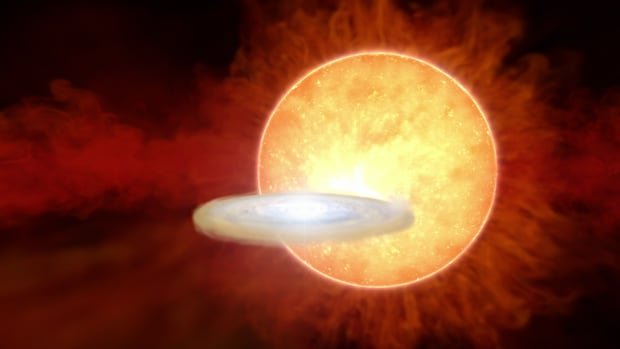
T Cor Bor, located approximately 3,000 light years away, is part of a binary system in the constellation Corona Borealis. The system consists of a large red giant and a dense white dwarf. The white dwarf undergoes a thermonuclear explosion known as a nova when it reaches its accretion limit, causing the star to become visible to the naked eye.
Historically, T Cor Bor has shown a pattern of increased activity before an eruption, with the last eruption occurring in 1946. Despite multiple predictions of imminent eruptions based on fluctuations in brightness, the exact timing remains uncertain.
Recent research suggests potential eruption dates, with varying predictions on the timing. Despite the uncertainties, amateur astronomers continue to monitor T Cor Bor closely and provide valuable observations.
When T Cor Bor does erupt, it will briefly brighten significantly before dimming again, making it visible to the naked eye for a short period. The star’s activity is being closely monitored, and astronomers are prepared for the event when it occurs.

