
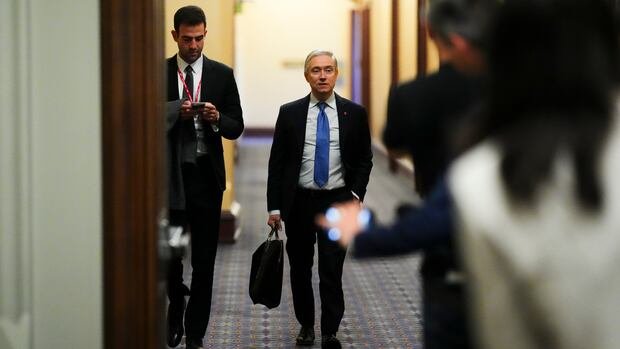
Finance Minister François-Philippe Champagne highlighted a recent report from the International Monetary Fund indicating that although the global economy remains resilient in the face of U.S. tariffs, trade uncertainty is impeding its progress. Champagne is currently in Washington attending meetings of the G7 and G20 finance ministers, as well as the annual gatherings of the International Monetary Fund and World Bank Group. The minister emphasized the importance of stability and predictability in the world economy, citing Canada as a key player in achieving this goal.
The IMF’s latest assessment revealed that global growth, while sluggish, is not as dire as previously anticipated. However, the report cautioned that significant risks persist due to ongoing trade tensions and overall economic volatility. Projections indicate a gradual decline in global growth rates over the next few years, with potential downside risks identified, such as prolonged uncertainty, protectionist measures, and labor market disruptions.
Canada, heavily impacted by U.S. tariffs, is expected to experience a slowdown in growth this year. Despite this, the IMF forecasts Canada to regain its position as the second-fastest-growing economy among the G7 nations in the coming year. Trade uncertainties continue to loom over the Canadian economy, with efforts underway to address the challenges posed by Trump’s tariffs on various Canadian industries.
President Trump has hinted at additional tariffs on various sectors, further complicating trade relations. While recent meetings between Prime Minister Mark Carney and U.S. officials have not yielded concrete agreements, ongoing discussions aim to find solutions to the trade disputes. The global economy is grappling with a shifting trade landscape, prompting all G7 countries to navigate fiscal constraints and adapt to the changing environment.
Minister Champagne emphasized the importance of fiscal discipline and strategic investments in stimulating economic growth, aligning with the IMF’s recommendations. The upcoming federal budget, scheduled for release next month, is expected to include substantial investments in key areas to bolster Canada’s economic resilience. Carney’s government plans to introduce measures to balance the operating budget by 2028-29, focusing on capital investments and operational spending adjustments to promote long-term prosperity.
As Canada strives to transition from reliance to resilience, Champagne expressed confidence in the nation’s future prosperity, citing its robust trade agreements, abundant resources, and skilled workforce. Despite short-term turbulence, he remains optimistic about Canada’s economic outlook and its ability to navigate the evolving global trade landscape.

