
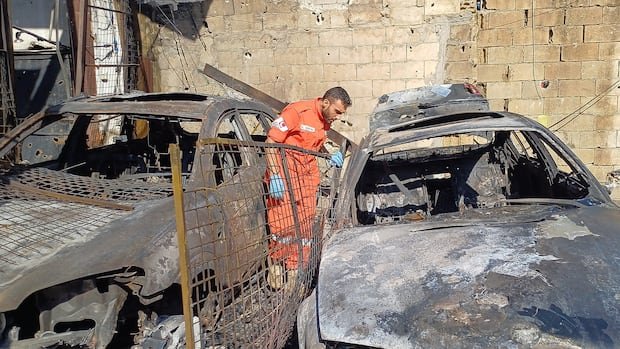
The Israeli military conducted airstrikes in southern Lebanon on Wednesday targeting Hezbollah infrastructure following a drone strike earlier that day that resulted in casualties, including students on a bus. This escalation of tensions between Israel and militants led to a new round of strikes. The previous night, an airstrike in the Palestinian refugee camp of Ein el-Hilweh resulted in 13 fatalities, marking the deadliest Israeli attack since a ceasefire was established a year ago.
The Israeli military issued warnings and subsequently launched strikes in several villages in southern Lebanon, specifically Shehour and Deir Kifa, citing them as Hezbollah targets. The military claimed that Hezbollah was attempting to re-establish itself in the region and rebuild its capacity. Israel highlighted that the weapons facilities targeted were located among civilians, violating agreements between Israel and Lebanon.
In a separate incident, a drone strike in the village of Tiri caused casualties, including one fatality and multiple injuries, with students among the victims. The identity of the deceased individual was initially unknown but later confirmed by the Israeli military as a Hezbollah operative. The ongoing conflict between Israel and Hezbollah has resulted in significant loss of life and destruction in the region.
Both sides have engaged in military actions, with Israel targeting Hezbollah military sites, while Hamas, another militant group, denied the Israeli accusations of an attack on its training compound. The situation remains volatile, with efforts to disarm Hezbollah facing challenges as long as Israel maintains its presence in certain border areas.
The recent conflict between Israel and Hezbollah, which began in 2023, has had devastating consequences, leading to thousands of casualties and significant infrastructure damage. The continuous cycle of violence underscores the complexities and longstanding tensions in the region, with significant implications for regional stability and peace efforts.

