
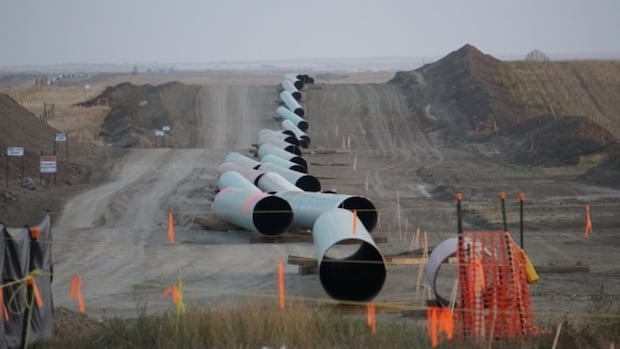
After over 15 years since its inception, the Keystone XL pipeline is potentially being reconsidered for development, despite facing significant challenges. Prime Minister Mark Carney reportedly discussed the project with U.S. President Donald Trump, who showed interest in its revival.
The pipeline, originally intended to transport crude from Alberta to Nebraska, has a turbulent history of approvals and cancellations. South Bow, the current owner, expressed support for increasing Canadian crude oil transportation but was not involved in recent discussions regarding the pipeline’s revival.
Richard Masson, an industry expert, noted the surprising possibility of the pipeline resurfacing given its past setbacks. The Alberta government invested around $1.5 billion in the project in 2020, emphasizing its importance for the region’s economy.
However, concerns linger about the project’s viability, with experts suggesting that securing financial guarantees from the U.S. government is crucial for its success. Industry leaders like Adam Legge emphasized the need for robust protection against future cancellations to attract investment.
Alberta has been actively lobbying for new pipeline projects, including a proposal for a bitumen pipeline to British Columbia. Former premier Jason Kenney welcomed discussions on the Keystone XL pipeline, highlighting its economic benefits and job creation potential.
Environmental regulations pose a significant obstacle to private investment in the pipeline, requiring potential changes to facilitate its development. Despite renewed interest, opposition from environmental groups and legal uncertainties remain key challenges for the project’s revival.
The project’s fate may hinge on navigating political complexities and legal hurdles, as well as ensuring continuity across changing administrations. While the economic case for Keystone XL remains strong, uncertainties around its future persist in the face of evolving regulations and political landscapes.

