
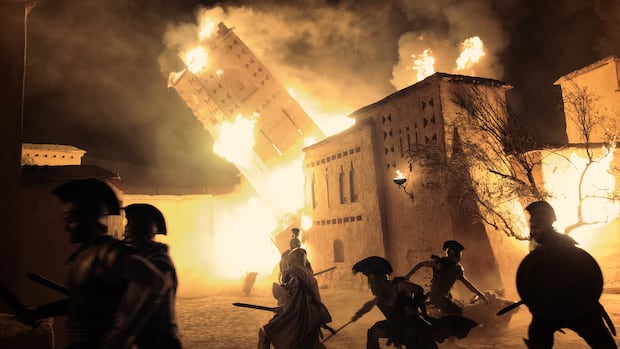
“Hollywood consistently makes the same error, which is overlooking how much audiences crave something innovative.”
In a new interview with the BBC, filmmaker Christopher Nolan discussed the industry’s reluctance to take risks. His response to the ongoing trend of unnecessary remakes and reboots is to reinterpret a 3,000-year-old epic poem by Homer, The Odyssey.
However, much like Odysseus’s crew caught between a perilous whirlpool and fearsome sea monsters, Nolan is caught in his own ambitious undertaking—to create the most realistic, immersive, Imax-enhanced version, while also bringing this world of witches and warriors to life.
A king exiled from his home seeks to return
With a Nolan-style narrative structure that loops back on itself through numerous flashbacks, our focal point is a weathered Matt Damon as Odysseus, a king compelled to leave his wife, Penelope (Anne Hathaway), and son, Telemachus (Tom Holland), to fight for Agamemnon.
As narrated in the opening song by court bard Travis Scott, Odysseus has been away for many years. During his absence, the kingdom has been overrun by suitors, particularly Robert Pattinson as Antinous, who plots to claim the throne of the missing king.
While Penelope delays and Telemachus searches for his father, Odysseus and his crew embark on their epic voyage home, facing fierce elements, mythical beings, and even the deities themselves.
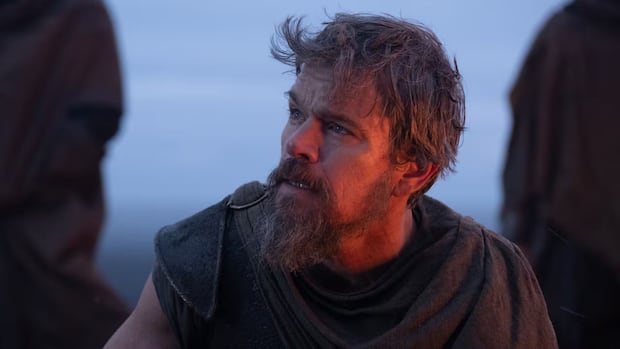
Christopher Nolan’s latest film brings the ancient Greek classic The Odyssey to life, while interweaving flashbacks to the Trojan War in his characteristic nonlinear fashion. CBC’s Eli Glasner notes that although some aspects may be perplexing, the performances are outstanding — and he is eager to watch it again.
From Saving Private Ryan to The Martian, Matt Damon is an actor we enjoy watching endure hardships, and it is on his furrowed brow that the film relies heavily.
If Tom Hanks represents Hollywood’s beloved everyman, then Damon embodies the character of perseverance. Much like Harrison Ford, he excels in roles that require resilience, and The Odyssey presents a multitude of challenges for him to navigate.
Patiently waiting at home, Hathaway portrays a queen acutely aware of her precarious situation. Penelope conceals her fragility beneath a fierce determination as she strives to safeguard her son.
In his role as the young man longing for a father he has never met, Spider-Man star Tom Holland delivers a more substantial, mature performance, showcasing moments of anger and exasperation.
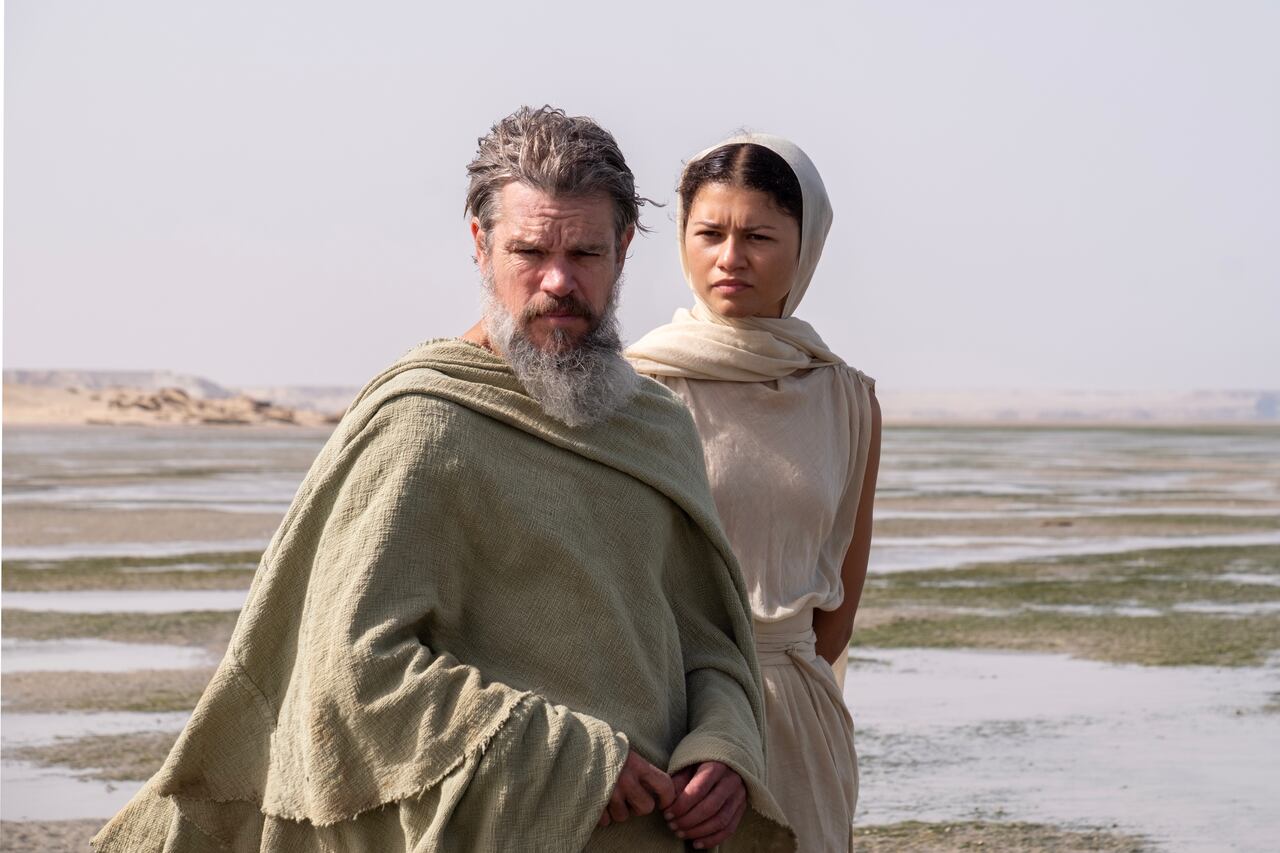
Damon as the long-suffering Odysseus trying to return home, alongside Zendaya as the goddess Athena. (Melinda Sue Gordon)
There is much more to explore: Zendaya embodies the goddess Athena, the tragic outcome of the warrior Sinon, a brief but impactful performance by Elliot Page, and Himesh Patel as Odysseus’s all-too-human second-in-command.
Alongside the impressive cast, another way Nolan roots the ancient tale is through his preferred collaborator: Imax.
An Imax camera like no other
This marks the first Nolan film filmed entirely in Imax.
While these cameras are typically reserved for grand action scenes (consider the chase sequence in The Dark Knight), Nolan and cinematographer Hoyte van Hoytema utilized them to capture everything from intimate mother-son exchanges to the dramatic siege of Troy.
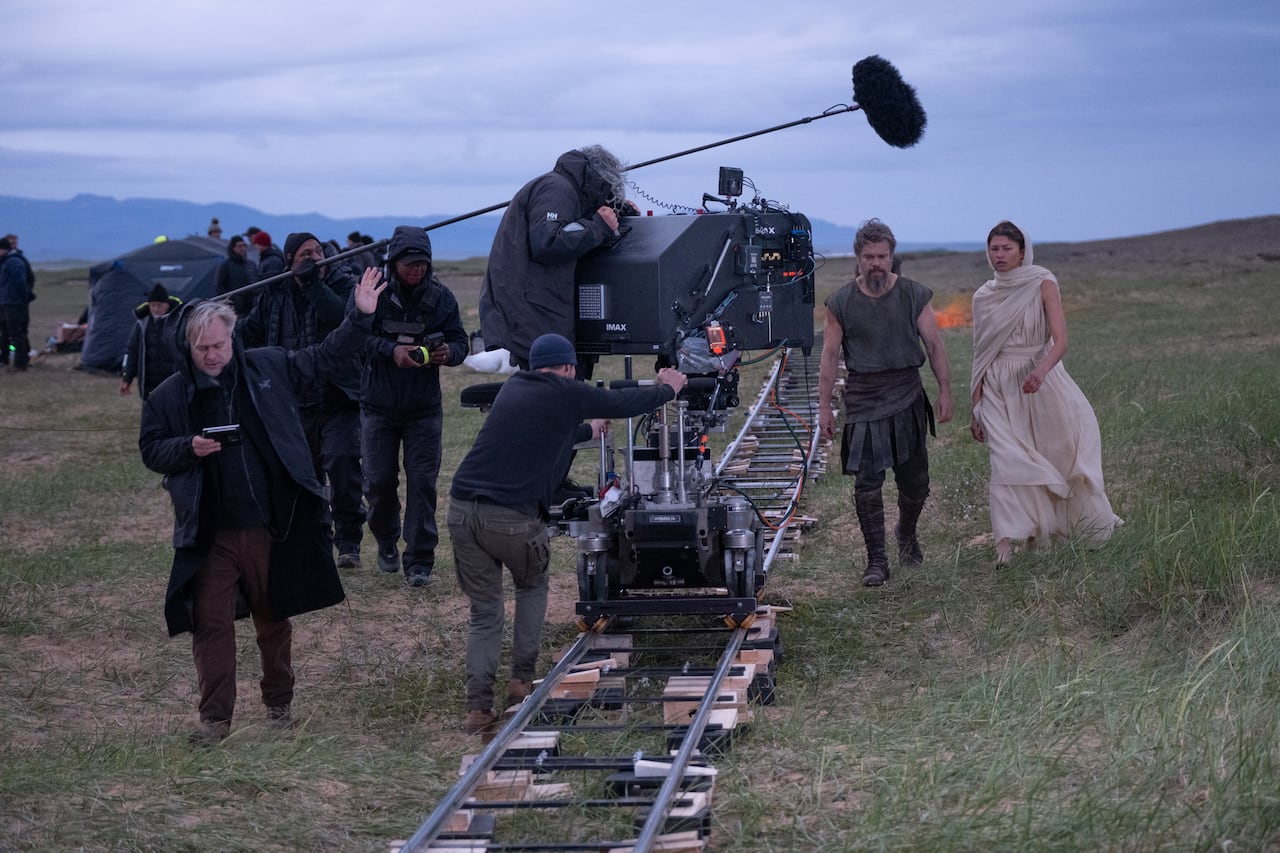
Nolan, positioned far left, directs Damon and Zendaya on set. The Imax camera, covered with a large sound-dampening enclosure, is visible beside the actors. (Melinda Sue Gordon)
Historically, the challenge with Imax cameras has been their sound quality.
The clamor of 65mm film running through the camera is often likened to a lawn mower, making it difficult to capture natural dialogue. For The Odyssey, Imax developed a “blimp” — a sound-proof enclosure that encased the camera.
-
Imax is transforming the cinema landscape — influencing which films make it to theaters
-
Sellouts for Nolan’s The Odyssey demonstrate audience demand for films projected on film
Weighing nearly 300 pounds, the new setup introduced fresh challenges, yet the outcomes are reminiscent of stepping into another era. One notable scene filmed on the Moroccan coast features hundreds of extras hauling a gigantic Trojan Horse, straining under the weight of its concealed cargo.
This exemplifies Nolan’s method, prompting his team to ask, “What if this were real?”
Even in the dialogue, Nolan’s screenplay seeks to bring the Greek poem into contemporary relevance. There are no ambiguous European accents; Tom Holland’s character speaks of his father in straightforward English.
Struggling with the supernatural
However, certain elements of the original Odyssey resist contemporary adaptation. This narrative is rich with magic and myth. Similar to the sirens tempting sailors to their doom, this is where Nolan’s modern sensibilities sometimes clash with the supernatural trials Odysseus faces.
There are instances where The Odyssey feels like a different genre of film, such as the encounter with a cyclops in a cave, where Odysseus’s crew frantically scrambles as the enormous beast lazily consumes soldiers.
Nolan has acknowledged the impact of special effects pioneer Ray Harryhausen, and his collaboration with actor and clown Bill Irwin demonstrates his effort to find human solutions to these grandiose scenarios.
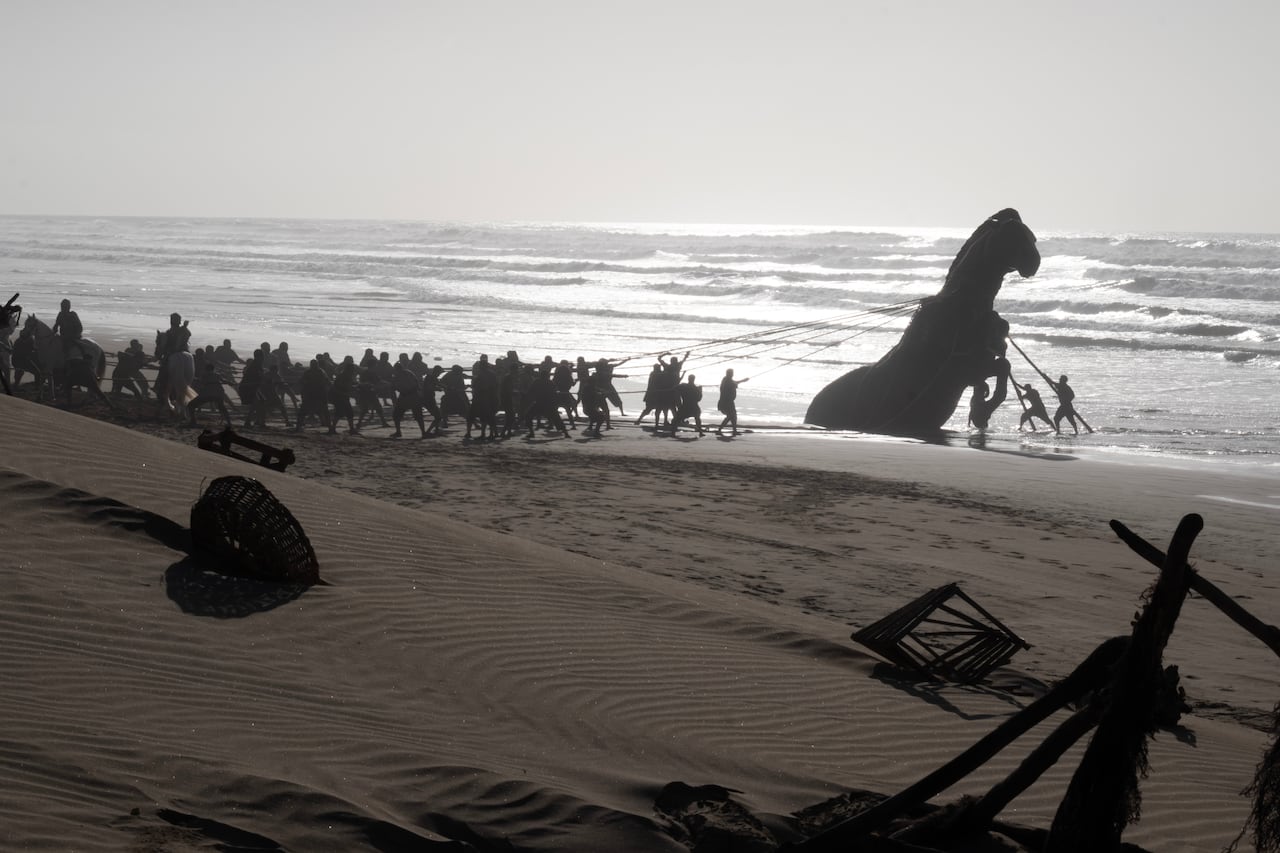
In Nolan’s adaptation, the Trojans discover the massive horse sculpture washed ashore. Believing it to be a gift from Poseidon, they pull it inside. (Melinda Sue Gordon)
Another memorable scene occurs when the soldiers encounter Circe, a lonely woman offering sumptuous food to weary travelers. With dynamic visuals and Samantha Morton’s captivating malevolence, this results in a deliciously unsettling nightmare.
While Nolan belongs to a select group of filmmakers capable of tackling such a project, after experiencing some of its more bizarre and extraordinary moments, I couldn’t help but ponder how The Odyssey might have fared in the hands of a director with a less reality-centric style, like Guillermo del Toro or Bong Joon Ho.
The dilemma lies in the fact that once you begin to play the “what if” game, it’s hard to stop. For instance, what if Robert Pattinson and Matt Damon had swapped roles? If Odysseus were as ruthless as experts suggest, Pattinson might have provided a more compelling portrayal of that duplicity, while Damon’s natural sincerity could have offered a suitor with greater virtues.
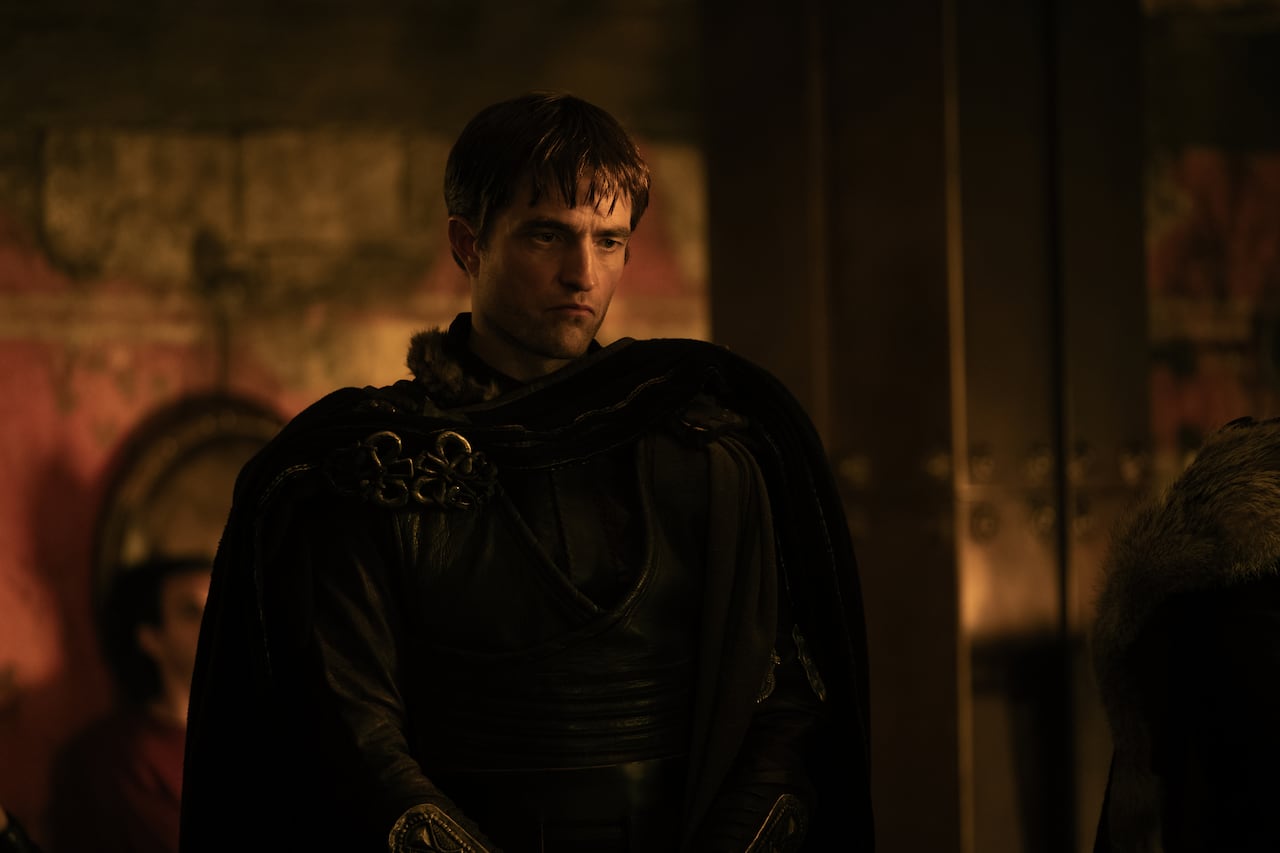
Robert Pattinson plays Antinous, the scheming suitor of Queen Penelope. (Melinda Sue Gordon)
Nonetheless, there is much to relish in what Nolan has crafted.
Amid the tonal shifts (such as Damon’s Boston accent emerging as he exclaims about “getting off this f–king beach”), there are breathtaking visuals: Odysseus drawing his bow like an ancient power chord, the ochre red of a sail flapping against a tumultuous sea. Or the exquisite framing as Antinous confronts Penelope, with Hathaway’s face obscured behind the strings of her loom, creating a delicate barrier against Pattinson’s probing inquiries.
From atomic conflicts to ancient warfare
If there’s another signature aspect of Nolan’s work to appreciate, it’s Odysseus grappling with his legacy.
In interviews, the director has mentioned integrating Oppenheimer into his next project. As Odysseus reconciles his role in warfare, Nolan again confronts humanity’s potential for destruction and the repercussions we create.
I conclude with my usual Christopher Nolan caveat: The first time I viewed Oppenheimer, Interstellar, and Inception, I found them entertaining, mind-blowing, and perhaps a tad perplexing. With a dense narrative and his nonlinear storytelling style, fully comprehending a Nolan film in a single viewing is a Herculean task. That said, I look forward to experiencing it again. Perhaps soon.

