
Prince Edward Island is gaining recognition beyond its famous attractions like Anne of Green Gables, beaches, and potatoes, as a geologist from Nova Scotia suggests the province is becoming a promising hub for fossil discoveries. John Calder, a geoscientist working with the P.E.I. government to identify fossils, notes a surge in discoveries that is attracting global research interest.
Contrary to the previous belief that P.E.I.’s red sandstone, known as “red beds,” does not preserve fossils well, Calder explains that recent findings challenge this assumption. He emphasizes the importance of actively seeking fossils, as Islanders, rather than solely professional scientists, have been instrumental in recent discoveries. Notably, North Rustico resident Patrick Brunet has played a pivotal role in uncovering fossils on the island.
Fossil enthusiasts will have the opportunity to view these discoveries up close during Fossil Day on April 10, hosted by the P.E.I. Museum and Heritage Foundation. Calder will also share insights on the island’s fossil discoveries at a Nature P.E.I. meeting on April 7.
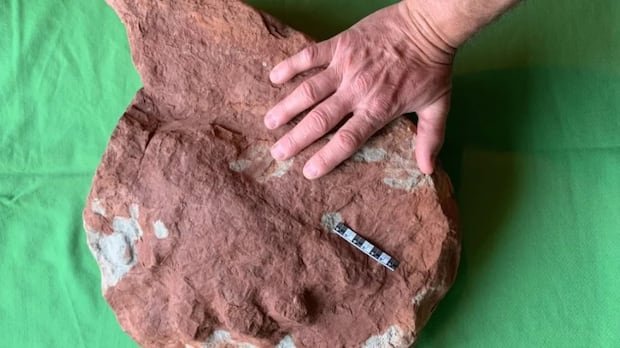
Delving into the geological history of P.E.I., Calder highlights that the province’s red rocks, dating back almost 300 million years to the Permian period, offer a glimpse into a time preceding the dinosaurs. The warm climate and rapid drying of sediments facilitated the preservation of various fossils, including footprints of reptiles and amphibians, insects, bones, and intact skeletons of reptiles.
Calder’s assessment of over 100 fossils discovered by Brunet last year indicates the potential for a permanent collection, possibly leading to the establishment of a museum on the island. He envisions a curated display that not only serves the scientific community but also captivates Islanders and visitors alike.

