
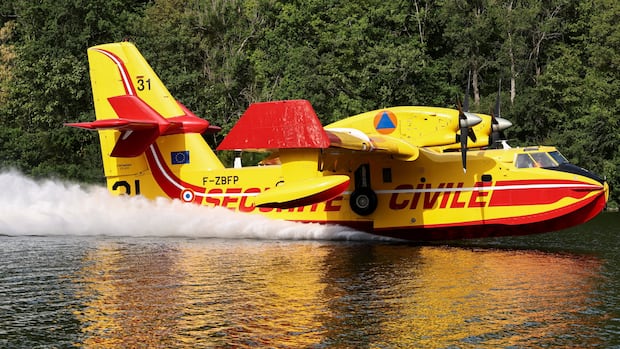
As Canada, the United States, and Europe face another devastating wildfire season, there is increasing pressure on the manufacturer of the Canadair “Super Scooper” water bombers to ramp up production and for the federal government to place substantial orders for these planes.
De Havilland, based in Calgary, is taking the unusual step of resuming production of the Canadair after acquiring the water bomber program. Prior to this, Bombardier manufactured the planes until 2015.
These highly regarded aircraft are handcrafted, with most assembly taking place in Calgary, utilizing a supply chain that spans across Canada. The announcement of the revived production line came in 2022, and it is now yielding results, with the first two aircraft in progress and expected to be completed and delivered in early 2028.
Canadian premiers and European leaders are eager to obtain these aircraft due to existing shortages and outdated fleets.
Originally manufactured in the 1960s, the Canadair amphibious firefighting plane was specifically designed to combat large fires in the Canadian wilderness. Its distinctive design enables it to fly at low altitudes through narrow canyons and scoop thousands of liters of water from lakes, rivers, and oceans in mere seconds.
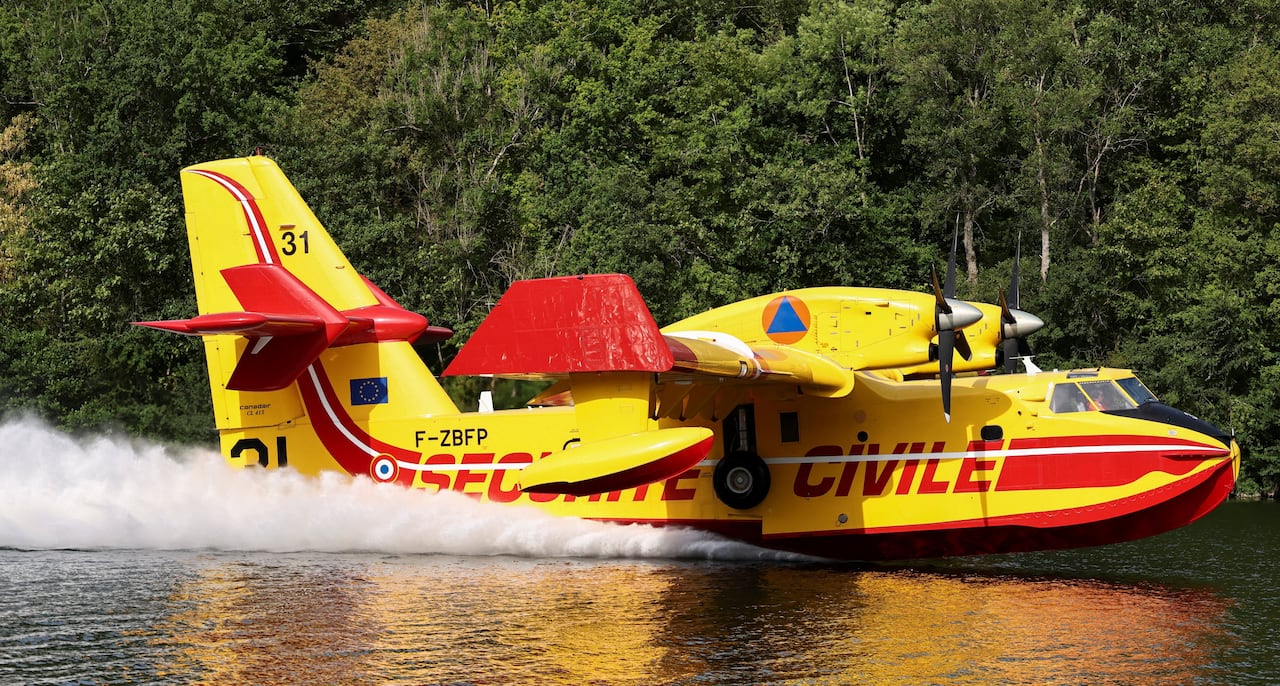
A Canadair aircraft collects water from the River Seine in Ivry-sur-Seine as it assists efforts fighting a wildfire in the Fontainebleau forest near Paris on July 14. (Stephane Mahe/Reuters)
This aircraft was specifically designed for firefighting, unlike other planes and helicopters that are typically modified for water-carrying capabilities.
The latest iteration of the Super Scooper will closely resemble previous Canadair models, featuring high wings that span 30 meters, a 6,100-liter water tank, and the recognizable yellow and red livery.
Political Pressure
Recently, opposition politicians in France and Spain have criticized current leaders for not having enough operational Canadairs, highlighting a lack of preparedness to deal with extreme weather and manage wildfires.
Several provincial premiers have voiced concerns about the absence of new water bombers for consecutive summers, including Manitoba’s Wab Kinew, who stated in June 2025, “We could use every water bomber we can get our hands on.”
De Havilland is feeling the political pressure.
“We are under pressure. We recognize that this aircraft is crucial not just for Canada, but for the world. We take our responsibility to our customers and the communities they serve very seriously,” said Neil Sweeney, the company’s vice-president of corporate affairs, during an interview at the Calgary assembly facility.
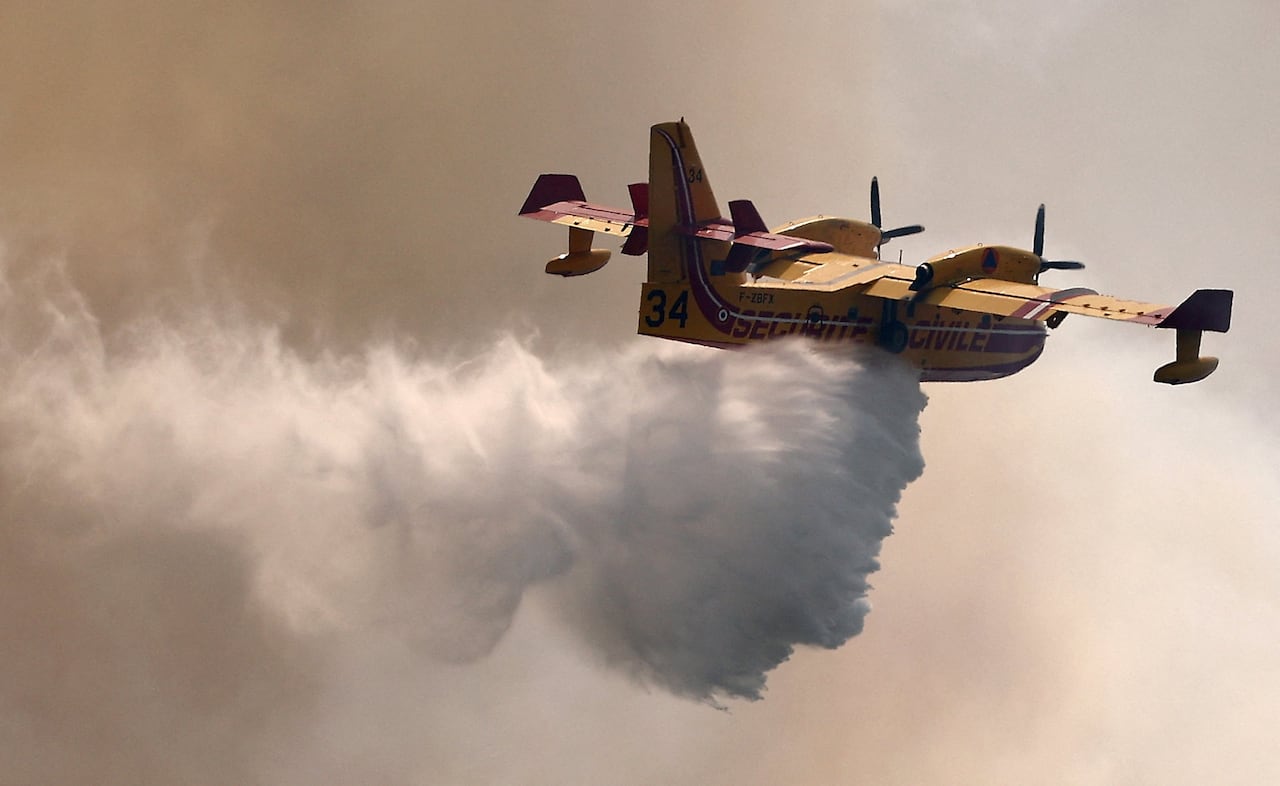
A Canadair aircraft drops water on a wildfire in the Fox-Amphoux communal forest near Ponteves, France, on July 21. (Manon Cruz/Reuters)
The demand is so significant that De Havilland is contemplating the establishment of a second production line, even while working to produce its first aircraft at current facilities.
In recent weeks, Alberta Premier Danielle Smith has stated she is collaborating with her provincial counterparts and the federal government to facilitate a substantial order from Ottawa, which would provide the aircraft manufacturer with the confidence needed to initiate a second line of production.
“We informed the Canadian government that if they placed an order for 50 aircraft,” stated Sweeney, “we could establish a second line immediately.”
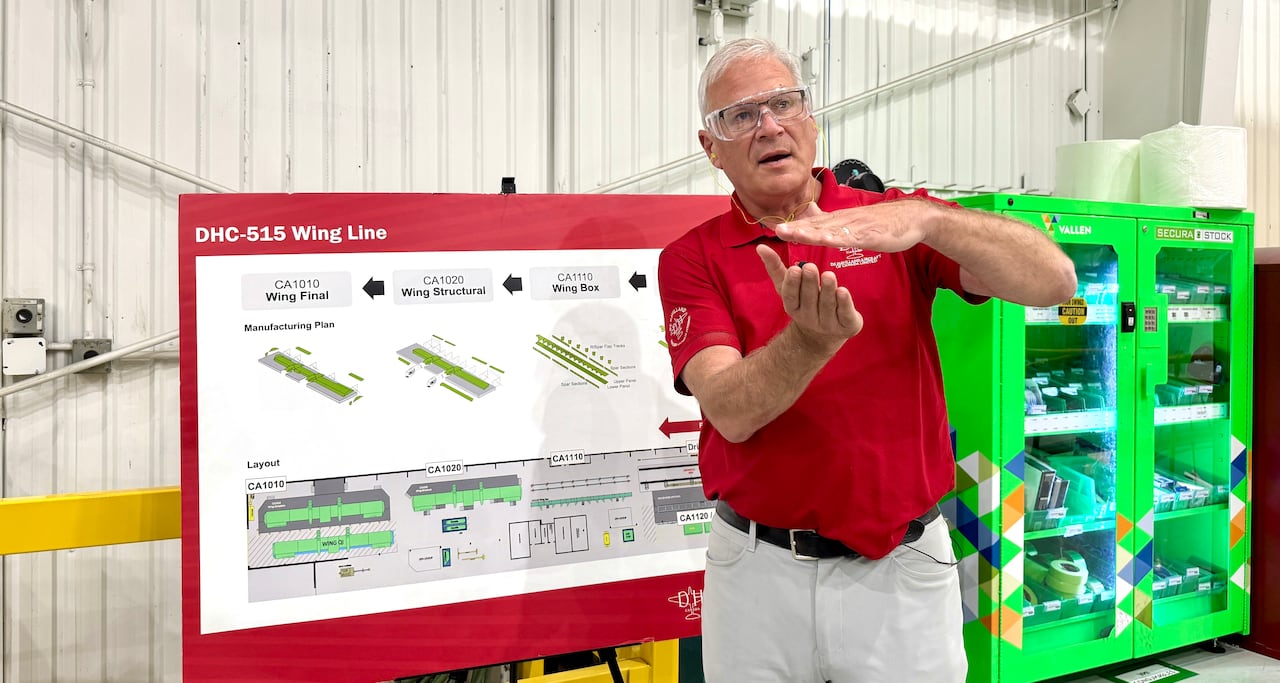
Inside its assembly facility in Calgary, De Havilland’s first two water bombers are taking shape, says Neil Sweeney, the company’s vice-president of corporate affairs. (Tiphanie Roquette/Radio-Canada)
Currently, De Havilland, which manufactures a variety of aircraft and employs approximately 4,000 individuals primarily in Calgary, Ontario, and Victoria, is capable of producing up to 10 water bombers each year at full capacity. A second production line would eventually boost output to 20 annually.
De Havilland has pending orders for 38 water bombers, with delivery times for new orders stretching between 2032 and 2033.
The Canadair requires tens of thousands of components, with around 80 percent manufactured in Canada. Some equipment on the production line is from as far back as the 1960s.
‘Demand is Enormous’
There is a pressing need for a second and potentially a third production line for Canadairs, according to John Gradek, an aviation expert at McGill University.
Multiple nations are in a state of alarm due to the wildfire crisis and the shortage of new water bombers, Gradek noted, estimating that hundreds of these aircraft would be quickly acquired if they were available.
He explained that the demand is global, driven by climate change.
“At this moment, we find ourselves in a scenario where demand is immense,” Gradek stated. “The world is seeking more water bombers, newer models, and we are not prepared for it.
“Every continent, from Australia to Europe to South America to North America — the world is engulfed in flames. We need the equipment to effectively combat these fires. Canadair water bombers have demonstrated their efficacy over the past 60 years, without a doubt.”
De Havilland has not disclosed the cost of a Canadair, but it is estimated to be around $80 million per aircraft, according to government announcements.
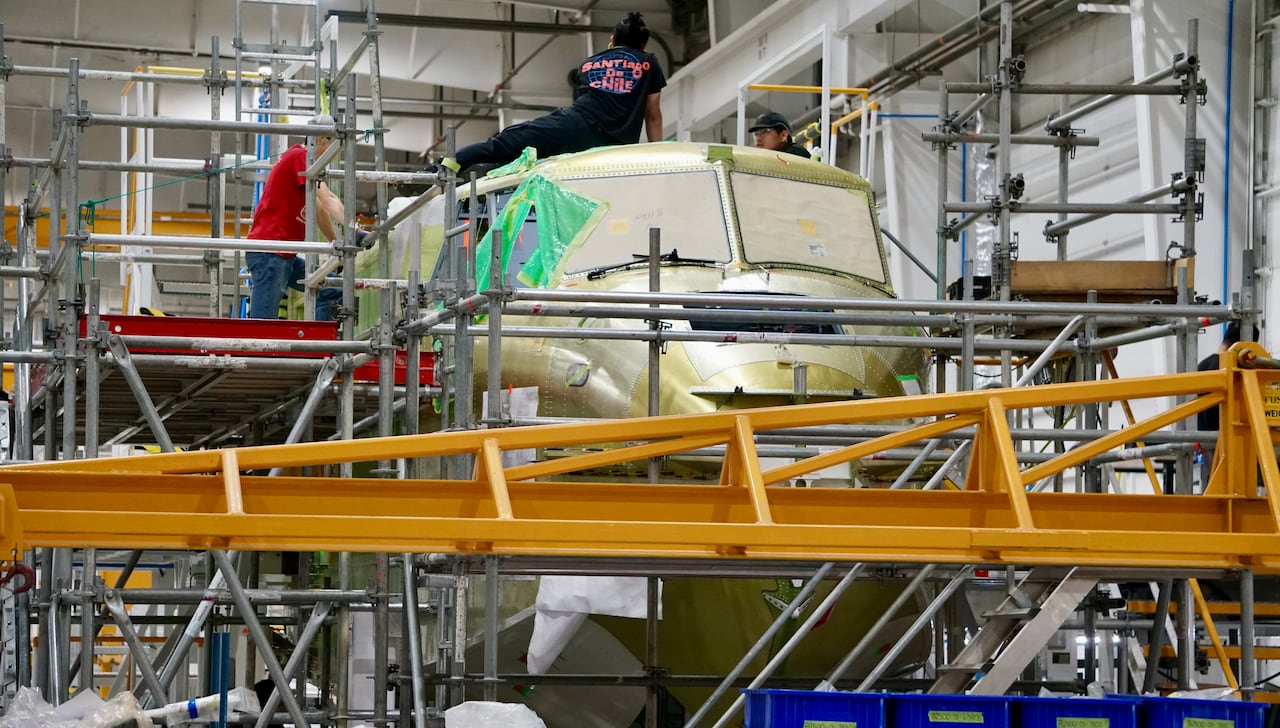
The under-assembly cockpit of the first Canadair aircraft built by De Havilland, after the company resurrected production of the water bombers. This particular aircraft will be delivered to Greece. (Kyle Bakx/CBC)
Risk of Potential Competition
If De Havilland fails to meet the rising demand for water bombers, there is a possibility that international companies might develop their own competing firefighting aircraft.
While creating a new aircraft would take years, it poses a genuine threat to Canadian manufacturing jobs, according to Gradek.
“Whether it’s Russia, France, the U.K., Greece, or others — they will respond quickly and aggressively,” he warned.
This alert comes at a time when the federal government is focusing on enhancing the national economy and bolstering domestic manufacturing.
“We have the finest scooping aircraft in the world, without question. We’ve had it for 60 years. However, having it for another 60 years is not assured,” Sweeney stated.
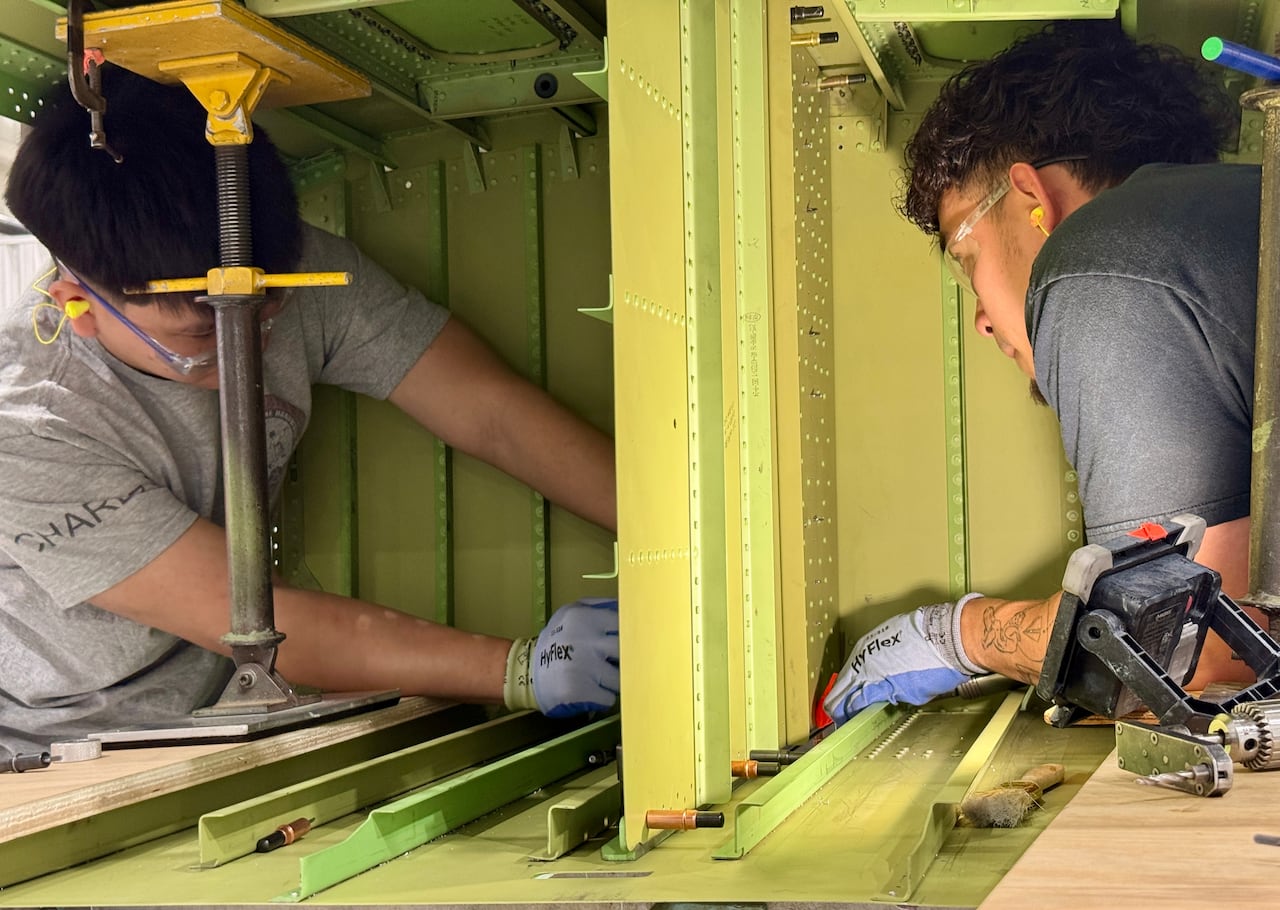
Workers assemble the wing of a Canadair by hand at the Calgary assembly plant. (Tiphanie Roquette/Radio-Canada)
Proposal for a National Fleet
One of the suggestions from a Senate report released in June regarding the escalating wildfire situation in Canada is for the federal government to establish a national fleet of modern firefighting aircraft.
This year, the federal government has leased 10 airplanes and helicopters, which are assisting provincial wildfire teams this summer.
“The federally funded aircraft are in high demand,” stated Alexandria Jones, a spokesperson for the Canadian Interagency Forest Fire Centre, a national non-profit organization that manages wildland fire efforts in Canada.
“We have indeed faced instances where we’ve had to prioritize requests,” she added.
While the demand is high, various types of aerial firefighting resources are merely one component in combating wildfires, Jones emphasized.
Aircraft are most effective in slowing the spread of wildfires, aiding in the creation of perimeters, and reducing heat to assist ground crews, she noted. However, their effectiveness can be limited by widespread smoke and challenging terrain.
“Planes do not extinguish fires; firefighters do,” Jones remarked. “They are not the ultimate solution to firefighting. While aircraft are a visually appealing aspect of firefighting, there are numerous other factors to consider regarding the ongoing wildfire threats we face today, primarily prevention and mitigation.”
The federal government is dedicated to protecting Canadians and enhancing national capacity to respond to “increasingly severe wildfire seasons,” stated Soraya Lemur, the press secretary for Eleanor Olszewski, the federal minister for emergency management.
“Minister Olszewski maintains close communication with her provincial and territorial counterparts to coordinate efforts and determine the most effective ways to support one another amid the growing impacts of wildfires,” Lemur said in an emailed statement.

