


Atlantic salmon in Sweden have been found to be consuming cocaine, courtesy of experiments conducted by researchers.
“Conducting tests on how cocaine impacts fish behavior may seem unusual,” stated Erin McCallum, an aquatic ecology associate professor at the Swedish University of Agricultural Sciences.
Given that cocaine and other substances have been detected in water bodies globally, including Canada, McCallum and her fellow researchers at the university aimed to comprehend its effects on fish in those environments.
A study, recently published in Current Biology, revealed that juvenile Atlantic salmon in Sweden’s Lake Vättern, when exposed to cocaine or its metabolite benzoylecgonine, exhibited increased swimming distances compared to their drug-free counterparts.
“In the natural habitat, swimming longer distances as a salmon provides more opportunities to explore various habitats and food sources,” explained McCallum in an interview with Bob McDonald from Quirks & Quarks.
“However, this behavior could also pose risks, such as encountering subpar habitats or new predators.”
Higher and Farther
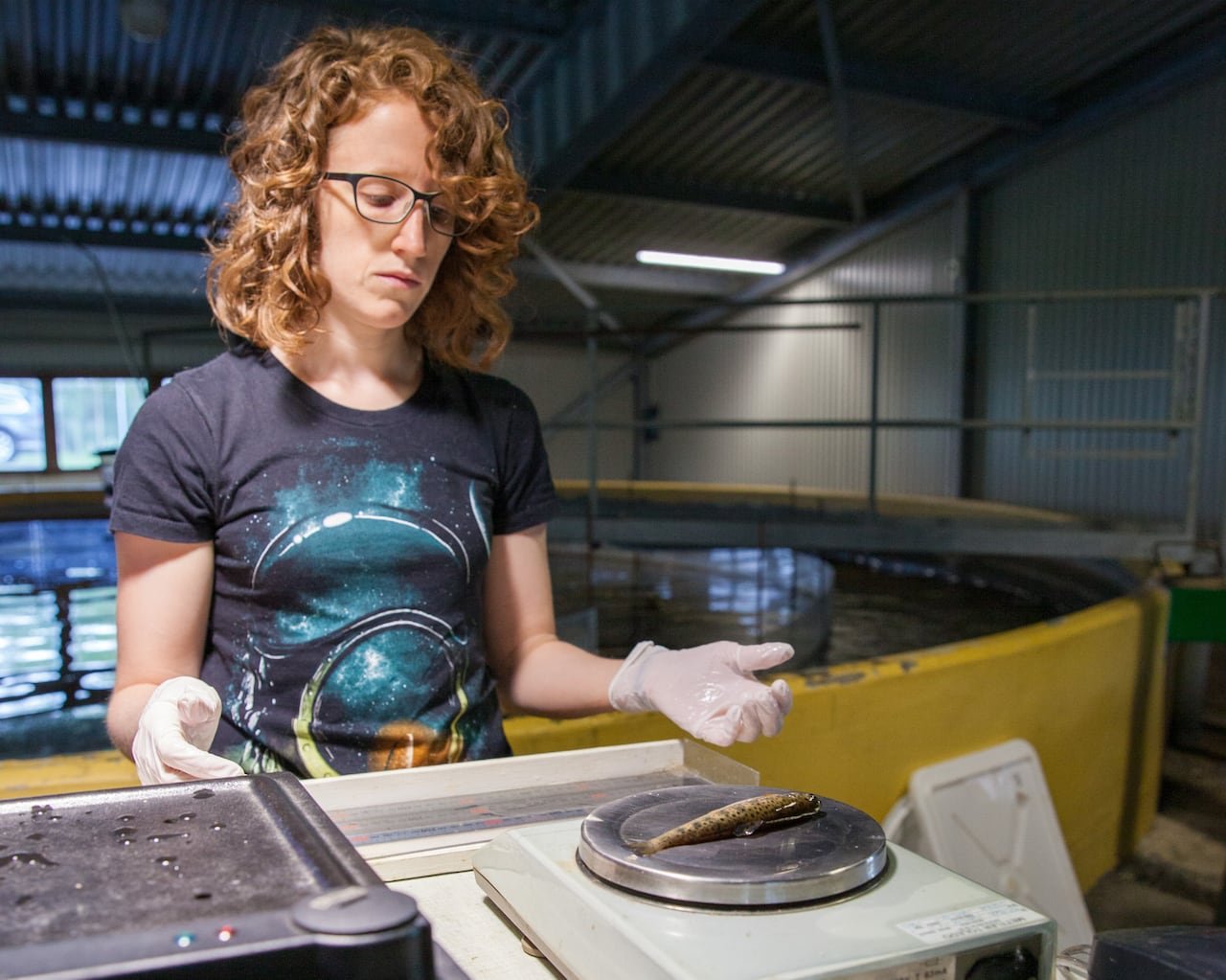
For the study, researchers needed to induce a state of drug influence in the young salmon.
This was achieved using slow-release chemical implants that exposed the salmon to either cocaine or benzoylecgonine, a metabolite often excreted by humans along with any unused cocaine.
Over an eight-week observation period, the fish exposed to benzoylecgonine swam nearly double the distance per week and ventured approximately 12 kilometers further across the lake. While the cocaine-exposed fish displayed similar behaviors, the effects were less pronounced and consistent.
Mark Servos, a biology professor at the University of Waterloo, commended the unique approach taken by the researchers, emphasizing the importance of conducting studies outside controlled laboratory settings.
“Although we can detect these substances in wastewater and surface waters, their effects on wild fish remain largely unknown,” noted Servos, who was not part of the study.
“This research brings us closer to understanding the potential subtle yet significant changes these substances may induce in fish.”
Cocaine-Exposed Sharks
McCallum highlighted that when the human body metabolizes drugs like cocaine, remnants are often flushed down the drain. Due to inadequate filtration in many wastewater treatment plants, illicit drugs, pharmaceuticals, and their byproducts are released into water bodies.
“Numerous pharmaceuticals, including substances like caffeine from daily consumption, have been detected in surface waters near wastewater treatment facilities,” McCallum explained.
Not limited to Swedish fish, a study from 2025 published in the Science of the Total Environment reported the global presence of drugs like

