
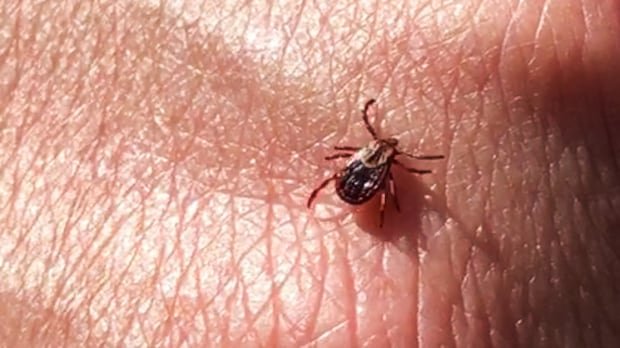
In the past, it was believed that encountering ticks was more common during peak summer months and in places with tall grasses. However, new guidance from Wellington-Dufferin-Guelph Public Health suggests that tick checks should be done after any outdoor activity when the temperature is above 0 C.
According to Phil Wong, the director of operations for health protection at the health unit, an increase in tick encounters has been observed through a surveillance program where people report their sightings. The locations where ticks are found have expanded beyond wooded trails, including parks, trails, camping areas, private properties, and occupational settings for outdoor workers.
Wong highlighted that many people are discovering ticks on their private properties while gardening or raking leaves, not just in long grassy areas. He reassured parents that ticks are unlikely to be found on playgrounds but advised doing a thorough tick check on children after they come indoors.
Wellington-Dufferin-Guelph Public Health has updated its tick guidance due to the growing local tick population. Experts warn of a continuous influx of ticks from the U.S. into Canada. Health Canada reports over 40 tick species in Canada, some native and others introduced through hosts like birds and deer. Some ticks carry diseases, such as the Western blacklegged tick transmitting Lyme disease.
The establishment of the Canadian Tick Research and Innovation Centre at Acadia University and the G Magnotta Lyme Disease Research Lab at the University of Guelph aims to enhance the study of ticks and tick-borne illnesses. Justin Wood, a Lyme disease survivor and scientist, emphasizes the importance of early diagnosis and intervention for effective treatment.
Despite the risks of encountering ticks, Wong encourages people to enjoy outdoor activities responsibly and report any tick sightings online for tracking purposes. He emphasizes the importance of conducting tick checks after returning indoors.

