
Canadian authorities are working diligently to decipher Donald Trump’s recent social media announcement regarding a 10% increase in what he terms as the “Tariff on Canada.” However, the U.S. president has not provided specific details regarding which Canadian exports will be affected by the tariff hike, and no official notification of the increase has been given to Canada.
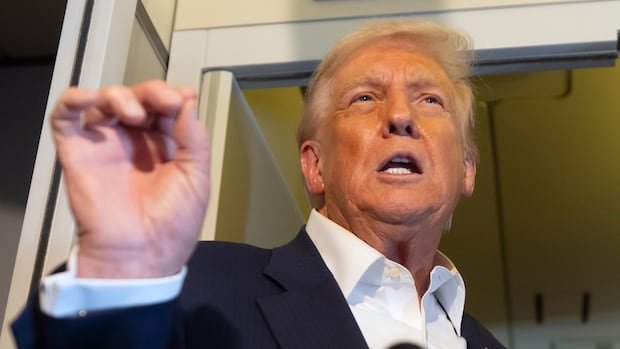
During a press briefing on Air Force One, Trump was questioned about the timeline for the tariff increase implementation, to which he responded evasively, stating, “I don’t know when it’s going to kick in, and we’ll see, but I don’t really want to discuss it.” Despite this, Trump extensively discussed an advertisement by the Ontario government that seemingly led to the cessation of trade negotiations with Canada and the subsequent tariff escalation.
Trump persistently claimed that the Ontario ad misrepresented Ronald Reagan’s stance on tariffs, despite substantial evidence indicating Reagan’s opposition to tariffs on economic allies like Canada. He alleged that the ad distorted Reagan’s views to cater to the Supreme Court’s preferences.
The upcoming U.S. Supreme Court hearing on November 5 will address Trump’s administration appeal against a ruling that deemed his imposition of broad tariffs on Canada, Mexico, and other nations as exceeding his constitutional authority. Trump justified his actions by citing concerns related to fentanyl trafficking, illegal immigration, and trade imbalances.
In response to inquiries about his decision to penalize Canada over a provincial government ad, Trump asserted that both Canadian officials and the Prime Minister were aware of the ad’s content. He criticized Canada for what he perceived as unfair trade practices and criticized past representatives for failing to secure beneficial deals for the U.S.
When questioned about a potential meeting with Prime Minister Mark Carney at the Asia-Pacific Economic Cooperation (APEC) summit, Trump expressed reluctance, stating, “I don’t want to meet with him. I’m not going to be meeting with him for a while now. I’m very happy with the deal we have right now with Canada, and we’re going to let it run.”
Senior members of the U.S. administration were engaged in discussions with Canadian officials regarding potential tariff relief on steel and aluminum imports before Trump abruptly ended the negotiations. The White House suggested that the Ontario ad was not the sole reason for Trump’s intensification of the trade conflict with Canada. Statements from the White House highlighted perceived Canadian reluctance to engage constructively with the administration.
Trump’s decision to terminate trade talks was attributed to frustration with Canada’s negotiating stance, as expressed by Kevin Hassett, the head of Trump’s National Economic Council. Treasury Secretary Scott Bessent criticized the Ontario ad as interference in U.S. sovereign matters and labeled it as propaganda aimed at denouncing tariffs. However, specifics on which Canadian exports would be impacted by the 10% tariff increase were not provided by Bessent when questioned by media personalities.

