
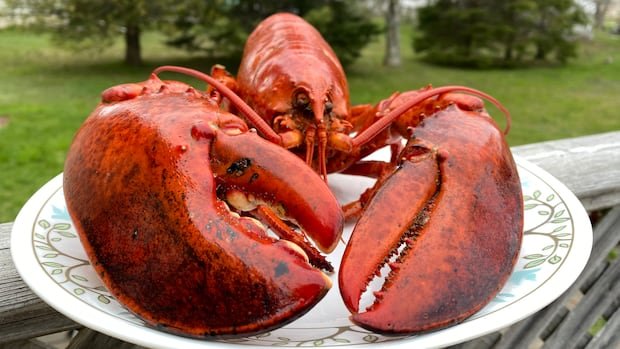
In Cape Breton, a culinary instructor at Nova Scotia Community College is guiding students on the ethical ways to cook and prepare lobsters. Adam White, an experienced chef turned educator with over two decades of teaching experience, has adopted a new approach influenced by research from England. This method aims to phase out the practice of boiling lobsters alive by 2030, aligning with England’s recent legislation recognizing the sentience and ability to feel pain in decapod crustaceans and cephalopod mollusks.
Traditionally, lobsters were subjected to boiling alive, a process lasting around 11 to 14 minutes in heavily salted water. White highlights the shift in culinary practices towards more humane treatment by first chilling lobsters for 20 to 30 minutes to reduce pain sensitivity before swiftly ending their lives with a knife between the eyes.
Several countries, such as Switzerland, Norway, and New Zealand, have already prohibited the boiling of lobsters alive. England’s decision to implement a ban stemmed from a comprehensive review by the London School of Economics, referencing the work of esteemed animal behavior scientist Robert Elwood, who has extensively studied pain responses in crustaceans like crabs.
Elwood’s experiments revealed that crustaceans exhibit signs of physical stress akin to pain, challenging the misconception that their reactions are purely reflexive. He emphasizes the cruelty of boiling lobsters alive, advocating for more humane methods of euthanasia to minimize suffering. Despite these advancements, Nova Scotia’s Department of Fisheries and Aquaculture has not indicated any plans to alter current lobster processing practices within the province.

