
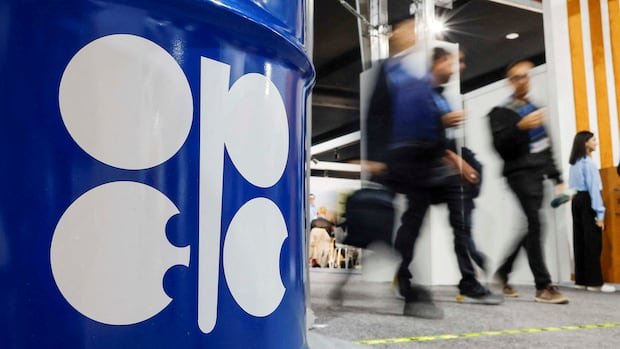
The United Arab Emirates has announced its decision to depart from the Organization of the Petroleum Exporting Countries (OPEC) and OPEC+ effective Friday, amid a significant energy crisis arising from the Iran conflict that reveals discord among Gulf nations.
Having been a longstanding member of OPEC since 1967 through Abu Dhabi and later as an independent nation in 1971, the UAE’s exit weakens OPEC’s influence on global oil supplies and deepens the rift with Saudi Arabia, a key OPEC leader. This move may allow the UAE to boost production post-Gulf exports resumption, as it will no longer be bound by OPEC quotas.
The UAE communicated its departure through the state-run WAM news agency, citing a strategic shift towards domestic energy investment and a commitment to a responsible role in global energy markets. Energy Minister Suhail Mohamed al-Mazrouei emphasized that the decision aligns with the country’s energy strategies.
Tensions with Saudi Arabia and concerns over regional energy policies factored into the UAE’s decision, with Mazrouei highlighting the move’s policy-driven nature after thorough consideration. The departure comes amidst strained relations with Saudi Arabia and ongoing challenges in the Strait of Hormuz, a critical chokepoint for global oil and gas shipments.
The UAE’s withdrawal from OPEC could challenge Saudi Arabia’s role as a market stabilizer, as the UAE possesses spare production capacity. Analysts suggest that the UAE’s departure raises questions about Saudi Arabia’s long-term market influence.
While the immediate market impact is expected to be minimal due to ongoing supply constraints from the Iran conflict, the UAE’s increased production post-exit could lead to market instability and oversupply once the crisis subsides. This move reflects broader geopolitical shifts, indicating a shift towards self-interest over multilateral alliances in the global energy landscape.

